Best 6 Hamster Toys Every Owner Should Add to the Cage
Best 6 Hamster Toys Every Cage Needs
Introduction
Creating the perfect hamster cage is about much more than food, water, and bedding. Hamsters are naturally active, curious animals that spend their nights running, digging, chewing, and exploring. In the wild, they can travel several miles every night in search of food and safe places to hide. Without enough enrichment inside their enclosure, pet hamsters can quickly become bored, stressed, and even develop unhealthy behaviors such as chewing cage bars or becoming less active.
The right toys help recreate these natural behaviors while keeping your hamster physically fit and mentally stimulated. A well-equipped cage encourages exercise, supports healthy teeth, reduces stress, and provides endless opportunities for exploration. Whether you own a Syrian hamster, a Roborovski, a Campbell’s dwarf hamster, or a Winter White hamster, choosing safe and engaging toys is one of the best ways to improve your pet’s quality of life.

In this guide, you’ll discover the 6 best hamster toys that every cage should have, why each one is important, and how it benefits your furry friend. These essential accessories will help create a happier, healthier, and more enriching environment for your hamster every single day.
1. Exercise Wheel – The Most Important Toy for Every Hamster
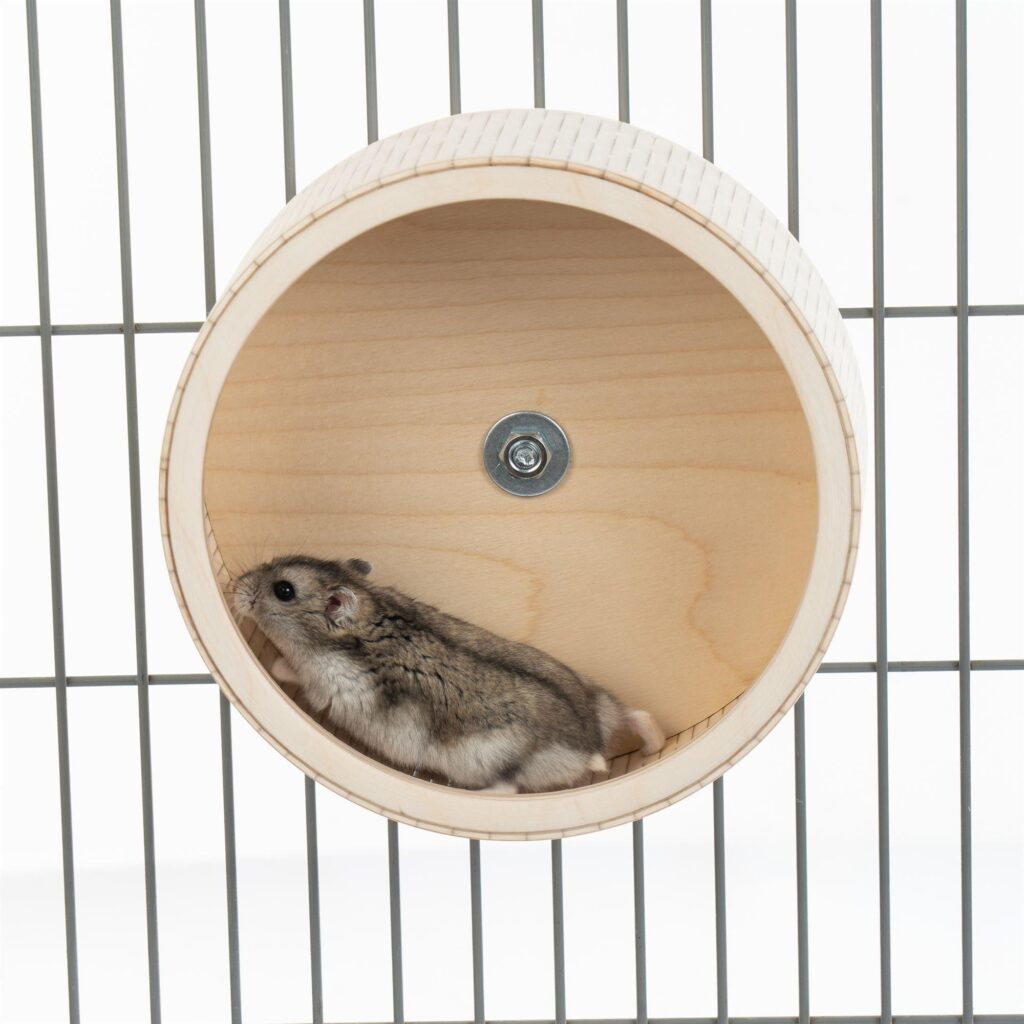
The exercise wheel is the single most important toy in any hamster cage. In the wild, hamsters naturally travel several miles every night while searching for food, exploring their surroundings, and staying active. A quality hamster wheel allows them to express these natural behaviors safely inside their enclosure.
Choosing the right wheel is essential for your hamster’s health and comfort. A solid-surface wheel is always a better choice than wire or mesh wheels because it protects your hamster’s tiny feet from injuries. The wheel should also be large enough to keep your hamster’s back straight while running, helping prevent spinal problems over time.
A quiet, smooth-spinning wheel is especially beneficial since hamsters are most active during the night. Silent wheels let your pet exercise for hours without disturbing your sleep.
Benefits of an Exercise Wheel
- Provides daily physical exercise.
- Helps prevent obesity and weight gain.
- Supports healthy muscles and joints.
- Reduces boredom and stress.
- Encourages natural nighttime activity.
- Helps prevent destructive behaviors such as bar chewing.
Buying Tips
- Choose a solid running surface instead of wire bars.
- Select the correct size for your hamster:
- 8–10 inches (20–28 cm) for Syrian hamsters.
- 6.5–8 inches (16–20 cm) for most dwarf hamsters.
- Look for a silent wheel with smooth bearings.
- Make sure the wheel is stable and doesn’t wobble.
Pro Tip: A high-quality silent wheel is one of the best investments you can make for your hamster. If you only buy one toy for the cage, make it a safe exercise wheel. It will improve your hamster’s physical health, reduce stress, and keep your furry friend active and happy every night.
2. Wooden Chew Toys – Essential for Healthy Hamster Teeth
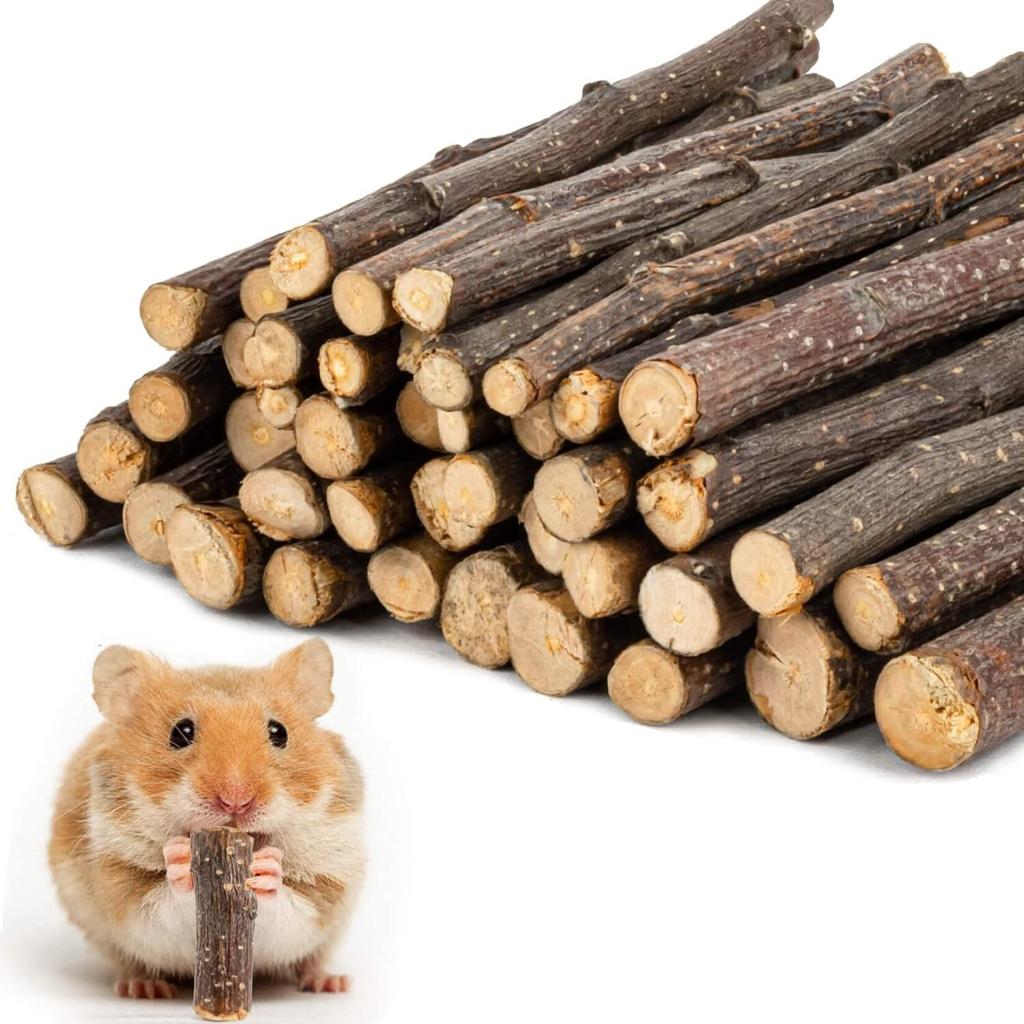
Chewing is a natural and essential behavior for every hamster. Unlike human teeth, a hamster’s front teeth grow continuously throughout its life. Without safe chew toys, the teeth can become too long, making it difficult for your hamster to eat and causing serious health problems.
Wooden chew toys provide a safe way for hamsters to wear down their teeth while satisfying their natural instinct to gnaw. Toys made from untreated apple wood, pear wood, or other pet-safe hardwoods are excellent choices. Many wooden chew toys also come in fun shapes like stars, carrots, bridges, and blocks, giving your hamster something new to explore while keeping its teeth healthy.
Adding several chew toys to different areas of the cage encourages natural foraging and keeps your hamster entertained every day.
Benefits of Wooden Chew Toys
Helps keep teeth at a healthy length.
Prevents dental overgrowth.
Reduces boredom and stress.
Encourages natural chewing behavior.
Provides safe daily enrichment.
Keeps your hamster active and curious.
Buying Tips
Choose 100% natural, untreated wood.
Avoid painted, glued, or chemically treated wood.
Offer different shapes and textures to keep your hamster interested.
Replace chew toys when they become heavily worn or damaged.
Pro Tip: Rotate your hamster’s chew toys every few weeks. Introducing different wooden toys keeps the cage exciting and encourages natural chewing behavior, helping your hamster stay happy, healthy, and mentally stimulated.
3. Hamster Tunnel – A Safe Place to Explore and Hide
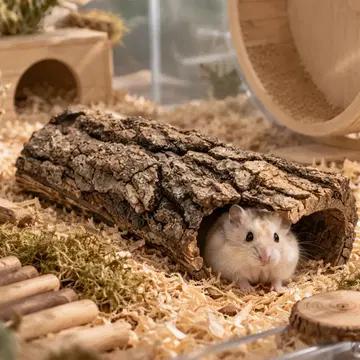
Hamsters are natural burrowers that love exploring tunnels and hiding in small spaces. In the wild, they spend much of their time traveling through underground tunnels to search for food and stay safe from predators. Adding a tunnel to your hamster’s cage helps recreate this natural environment and provides both physical activity and mental stimulation.
Hamster tunnels come in many materials, including natural cork bark, untreated wood, cardboard, and flexible pet-safe tubes. Cork and wooden tunnels are especially popular because they look natural, are durable, and can also be safely chewed.
Placing tunnels between different areas of the enclosure encourages your hamster to explore, exercise, and feel more secure throughout the day and night.
Benefits of a Hamster Tunnel
- Encourages natural burrowing and exploring.
- Provides a safe hiding place.
- Reduces stress and anxiety.
- Increases daily physical activity.
- Creates a more enriching cage environment.
- Helps shy hamsters feel secure.
Buying Tips
- Choose a tunnel large enough for your hamster to pass through comfortably.
- Select natural, pet-safe materials such as cork or untreated wood.
- Avoid tunnels with sharp edges or small openings.
- Place tunnels near hideouts or underneath bedding to create a more natural setup.
Pro Tip: Combine a tunnel with a hideout and deep bedding to create an underground-style habitat. This setup encourages your hamster to explore, hide, and behave more like it would in the wild, leading to a happier and more confident pet.
4. Sand Bath – A Natural Way to Keep Your Hamster Clean
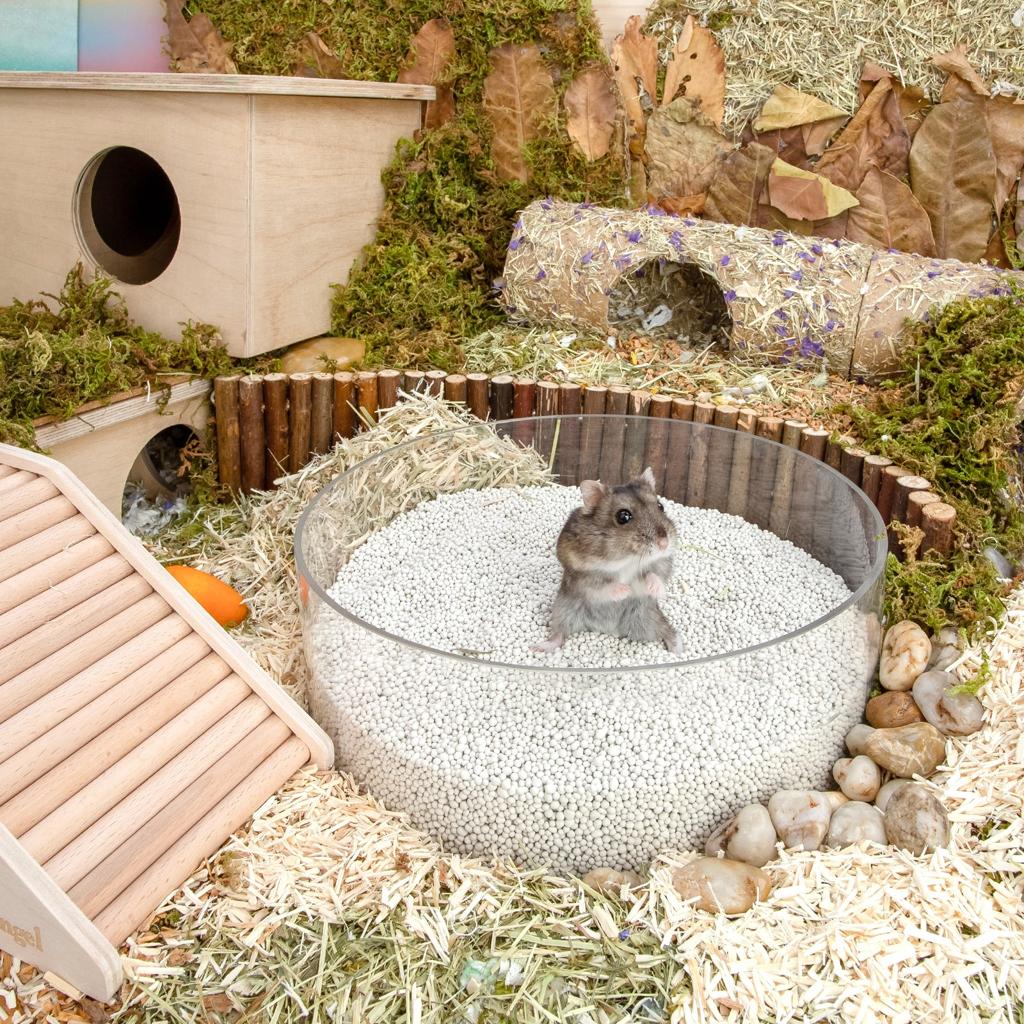
A sand bath is one of the most important accessories for a healthy hamster cage. Unlike humans, hamsters should not be bathed in water because water removes the natural oils from their fur and can cause stress or even illness. Instead, hamsters clean themselves by rolling in fine, dust-free sand.
A sand bath helps remove excess oil, dirt, and loose fur while allowing your hamster to perform one of its favorite natural behaviors. Many hamsters also enjoy digging and rolling in the sand, making it both a hygiene tool and a fun source of enrichment.
Choose a sturdy bowl or container large enough for your hamster to roll around comfortably. Fill it with dust-free bathing sand made specifically for hamsters or chinchillas. Avoid dusty products or calcium-based sand, which may cause respiratory or health problems.
Benefits of a Sand Bath
- Keeps your hamster’s fur clean and healthy.
- Removes excess oil naturally.
- Encourages natural grooming behavior.
- Provides mental stimulation and enrichment.
- Reduces boredom and stress.
- Gives your hamster a fun place to dig and roll.
Buying Tips
- Use dust-free bathing sand, not dusty powder.
- Choose a container large enough for your hamster to turn around easily.
- Replace dirty sand regularly to keep it clean.
- Never use water as a substitute for a sand bath.
Pro Tip: Leave the sand bath inside the cage for a few hours each day or permanently if you have enough space. Most hamsters love rolling, digging, and grooming in clean sand, making it one of the easiest ways to improve their daily well-being.
5. Foraging Toys – Keep Your Hamster’s Mind Active
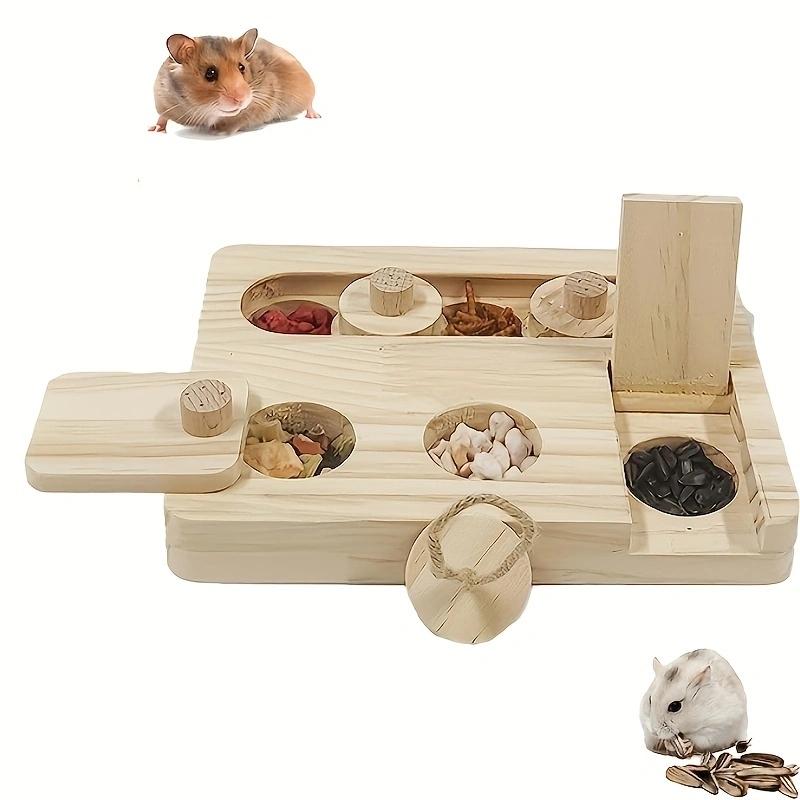
Foraging toys are one of the best ways to keep your hamster mentally stimulated. In the wild, hamsters spend hours every night searching for seeds, grains, and other food. Simply placing food in a bowl removes this natural behavior, making life inside the cage less exciting.
A foraging toy encourages your hamster to work for its food by sniffing, digging, pushing, or moving small objects to find hidden treats. This activity mimics natural food searching and helps prevent boredom while providing excellent mental enrichment.
There are many types of foraging toys, including wooden puzzle feeders, treat balls, cardboard puzzle boxes, and natural forage mats. You can also create simple DIY foraging toys using safe cardboard tubes or paper filled with bedding and a few healthy treats.
Benefits of Foraging Toys
- Encourages natural food-searching behavior.
- Provides mental stimulation.
- Helps reduce boredom and stress.
- Slows down eating and promotes healthy activity.
- Keeps your hamster curious and engaged.
- Adds variety to your hamster’s daily routine.
Buying Tips
- Choose toys made from pet-safe, non-toxic materials.
- Hide healthy treats or part of your hamster’s daily food inside the toy.
- Select puzzles that match your hamster’s size and skill level.
- Rotate different foraging toys every few weeks to keep them interesting.
Pro Tip: Instead of serving all your hamster’s food in a bowl, hide a small portion inside a foraging toy each day. This simple change encourages natural instincts, provides valuable mental exercise, and makes every feeding time more exciting.
6. Wooden Hideout – A Safe and Comfortable Shelter
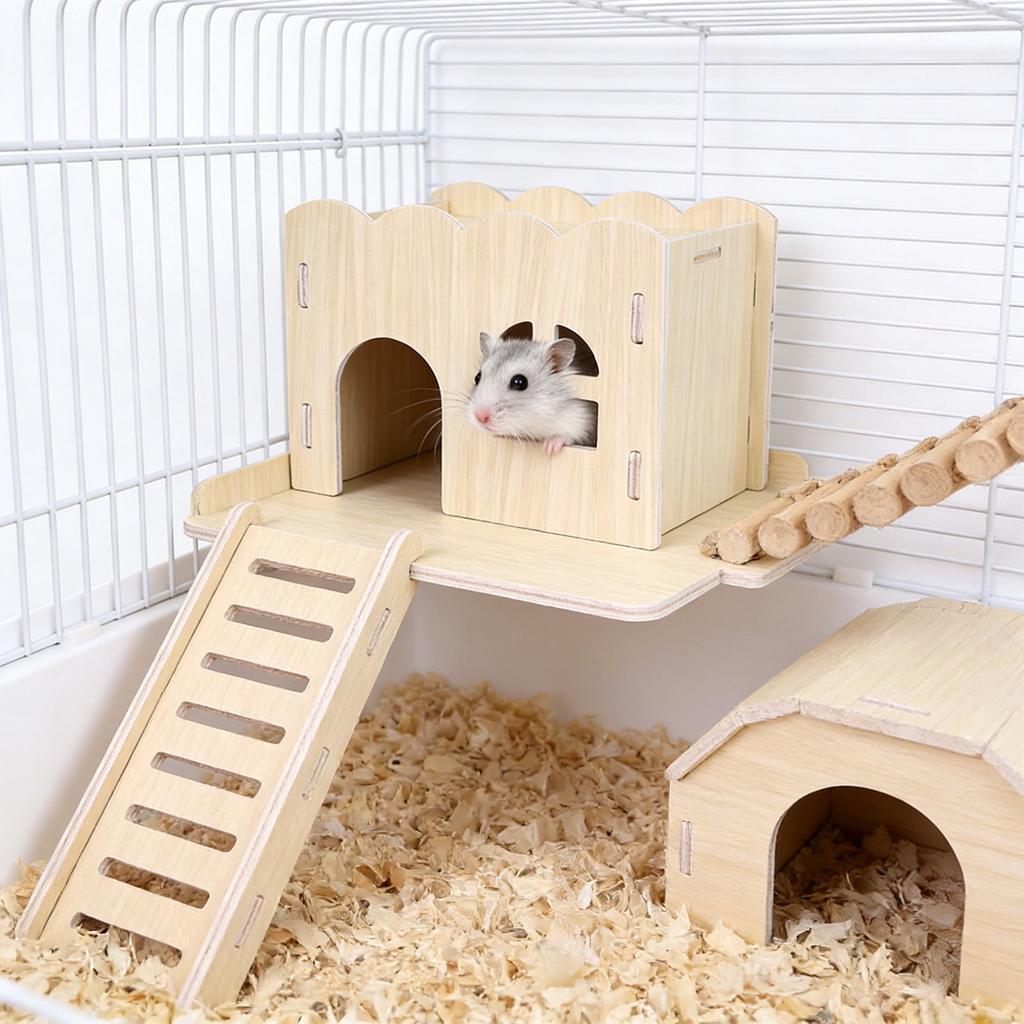
A wooden hideout is an essential part of every hamster cage. In the wild, hamsters spend most of the day sleeping in underground burrows where they feel protected from predators. Providing a secure hideout allows your hamster to rest, sleep, and relax in a quiet place that feels safe.
Wooden hideouts are one of the best options because they are durable, natural-looking, and safe for chewing. Many models include multiple entrances, giving your hamster extra security by providing more than one escape route. Some hideouts also have flat roofs that can be used as a feeding platform or resting area.
A comfortable hideout helps reduce stress and supports your hamster’s natural sleeping habits, especially since hamsters are nocturnal and spend most daylight hours resting.
Benefits of a Wooden Hideout
- Provides a safe place to sleep and rest.
- Helps reduce stress and anxiety.
- Encourages natural hiding behavior.
- Creates a more natural cage environment.
- Offers a secure space for storing food.
- Can also be safely chewed if made from untreated wood.
Buying Tips
- Choose a hideout made from untreated natural wood.
- Make sure it is large enough for your hamster to turn around comfortably.
- Select a model with at least two entrances for added security.
- Place the hideout on a stable surface and surround it with deep bedding to encourage natural burrowing.
Pro Tip: Add soft paper bedding inside the hideout to create a warm, cozy nesting area. Your hamster will often carry extra bedding into its house, creating a comfortable nest where it can sleep peacefully during the day.
Conclusion
Creating a happy and healthy home for your hamster goes far beyond providing food and water. The right toys help satisfy your hamster’s natural instincts to run, chew, explore, dig, and hide. A well-enriched cage not only keeps your pet physically active but also supports mental stimulation and reduces stress, leading to a longer and healthier life.
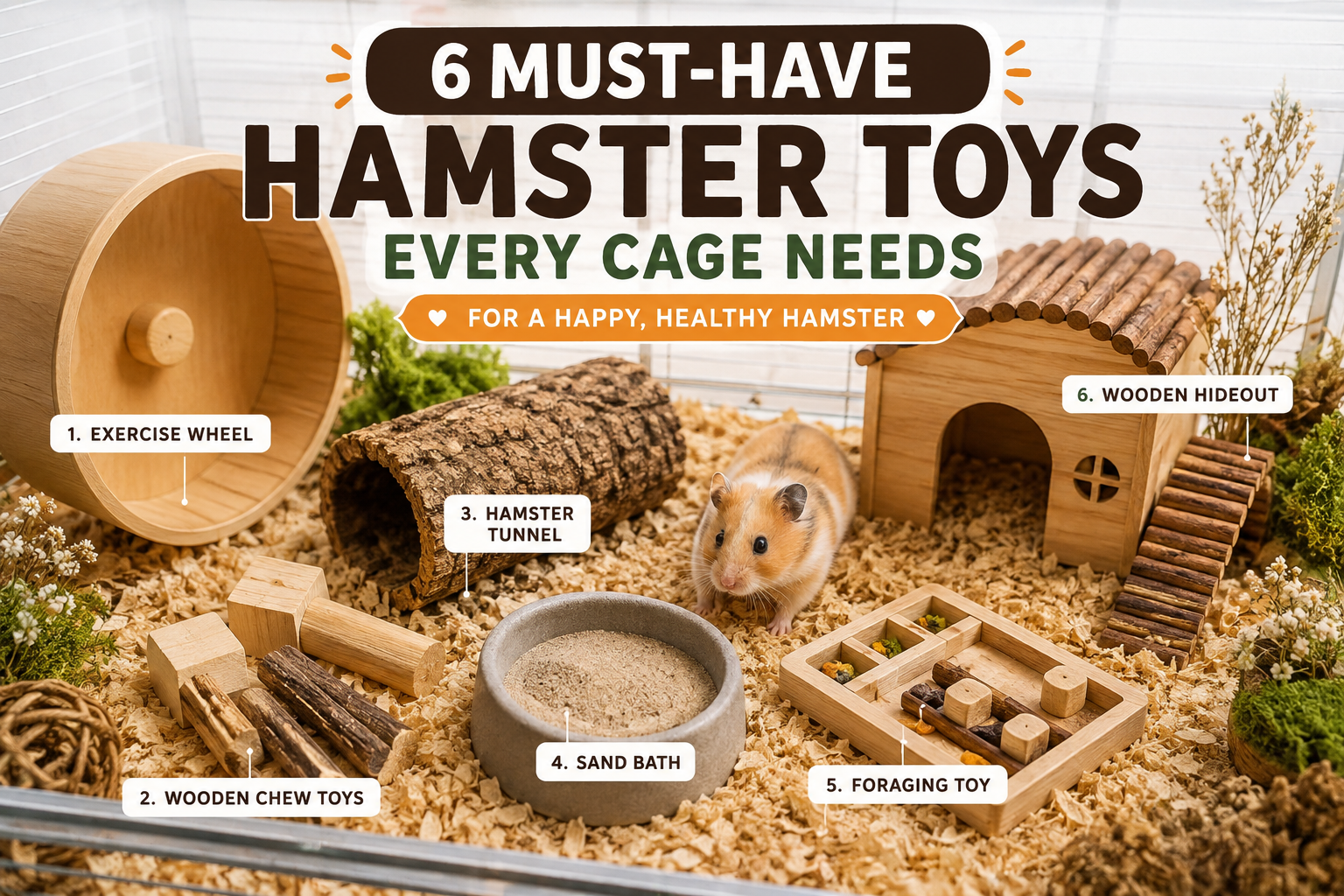
The six toys featured in this guide—a silent exercise wheel, wooden chew toys, a tunnel, a sand bath, foraging toys, and a wooden hideout—are among the most valuable additions you can make to any hamster enclosure. Together, they create an environment that closely mimics your hamster’s natural habitat while encouraging healthy daily behaviors.
Remember to inspect all toys regularly for damage, clean them as needed, and rotate accessories from time to time to keep your hamster interested and engaged. Small changes inside the cage can make a big difference in your pet’s happiness.
By investing in safe, high-quality hamster toys, you’re giving your furry friend the opportunity to stay active, curious, and comfortable every day.
Frequently Asked Questions (FAQ)
What is the most important toy for a hamster?
A solid, silent exercise wheel is considered the most important toy because it allows hamsters to get the daily exercise they naturally need.
Do hamsters really need chew toys?
Yes. A hamster’s teeth grow continuously throughout its life, so chew toys help keep them at a healthy length and prevent dental problems.
Can hamsters use a sand bath every day?
Yes. Most hamsters enjoy using a dust-free sand bath regularly to keep their fur clean and healthy.
How often should I replace hamster toys?
Inspect toys every week and replace any that are broken, heavily chewed, or no longer safe to use.
Are DIY hamster toys safe?
They can be, as long as they are made from pet-safe, untreated materials such as plain cardboard or untreated wood and contain no glue, paint, or toxic chemicals.