What to Feed Your Hamster A Complete Diet Guide for Health
Watching your tiny companion scurry across its enclosure brings joy. You cherish those quiet moments when your small friend trusts you enough to accept a treat from your palm. Providing proper nourishment is the most profound way to show love and ensure longevity for such a fragile life.
Many owners overlook how daily nutrition shapes physical vitality and behavioral happiness. Without balanced sustenance, pets often face preventable health struggles that diminish their quality of life. Understanding the nuances of daily intake remains vital for every responsible owner.
This resource serves as an essential hamster feeding guide designed for clarity and safety. By following this what to feed your hamster a complete diet guide, you gain the confidence needed to support long-term wellness. Let us explore the best practices for keeping your furry friend thriving for years.
Key Takeaways
- Prioritize high-quality pellets as the foundation of daily nutrition.
- Incorporate fresh vegetables in moderation to provide essential vitamins.
- Avoid sugary fruits and processed human snacks to prevent obesity.
- Ensure constant access to clean, filtered water for hydration.
- Monitor weight changes regularly to adjust portion sizes effectively.
Understanding the Nutritional Needs of Your Hamster
Your hamster depends on you for a balanced diet. As natural omnivores, they need a variety of nutrients. This ensures they stay energetic and healthy.
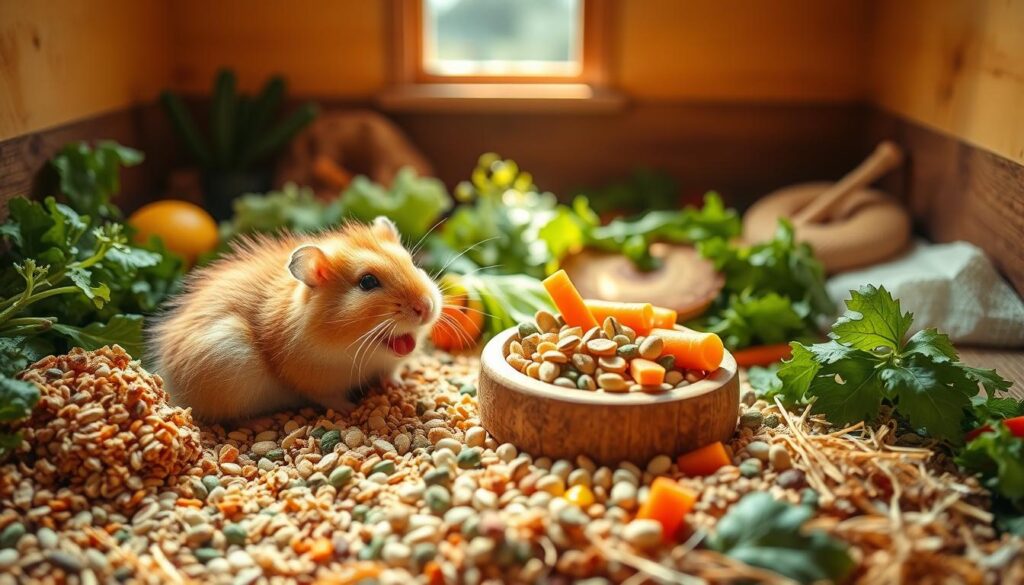
Good hamster nutrition is more than just filling a bowl. Quality ingredients help avoid health problems like obesity. Learning about their needs makes you a better pet owner.
The Role of Protein and Fiber in Hamster Health
Protein is key for muscle and tissue health. Hamsters, being omnivores, need protein to keep their energy up. Look for foods with essential amino acids to support their strength.
Fiber is also crucial for a healthy gut. A hamster diet with plenty of fiber helps prevent digestive issues. This creates a strong base for your pet’s health.
Differences Between Hamster Species and Dietary Requirements
Hamsters vary in their energy needs. Smaller species like Djungarian or Roborovski hamsters need more food due to their fast metabolisms. This is different from larger Syrian hamsters.
Knowing these differences is key for a balanced diet for hamsters. While a general hamster diet is a good start, adjust it based on your pet’s size and activity. Watch their weight and behavior to fine-tune their hamster nutrition.
What to Feed Your Hamster A Complete Diet Guide for Daily Meals
Feeding your hamster a consistent, healthy diet is key to their immune system. Following what to feed your hamster a complete diet guide ensures every meal boosts their energy and health. A good daily routine mixes processed food with natural variety.
Selecting High-Quality Commercial Pellets
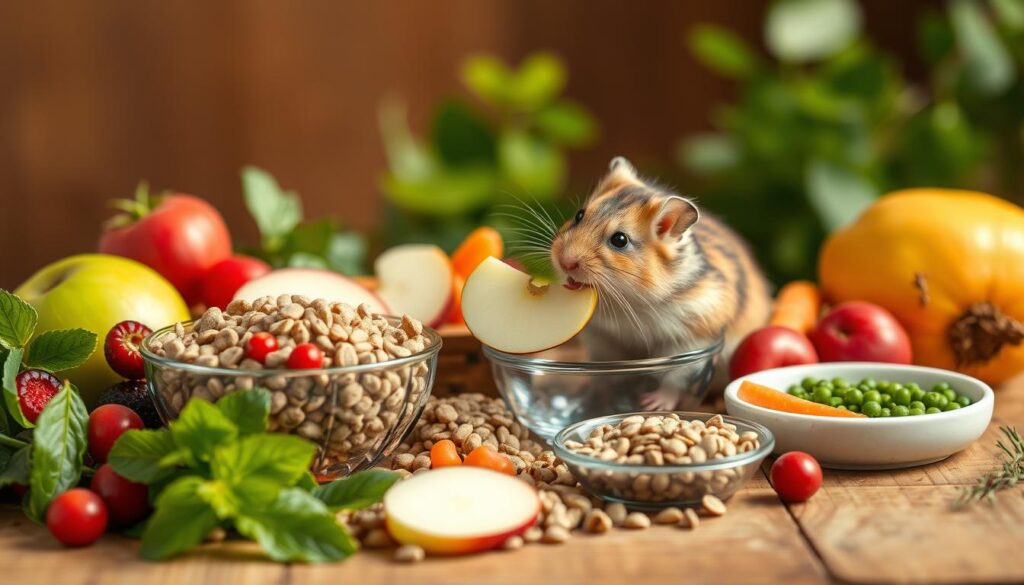
Commercial pellets are the base of hamster nutrition. They give your pet essential vitamins and minerals in every bite. When looking for the best hamster food, choose brands with high-quality protein and no added sugars or artificial dyes.
The Importance of Seed Mixes as a Supplement
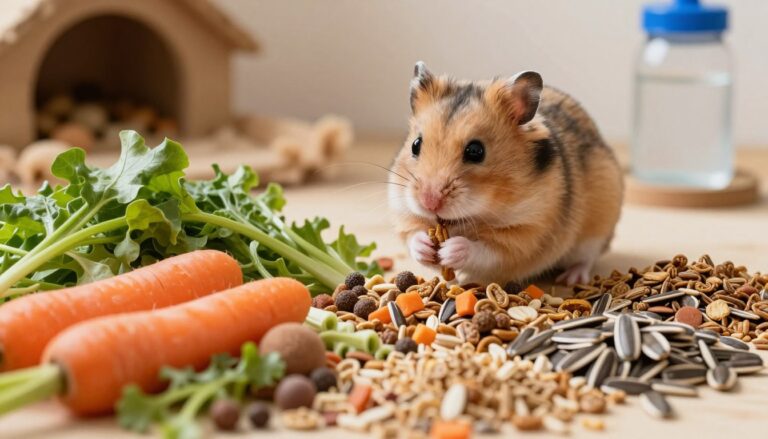
Seed mixes add variety and enrichment to your pet’s diet. High-quality mixes, like Little One feed, have up to 32 natural ingredients. These mixes encourage foraging, which is good for your hamster’s mind.
“A diverse diet is the key to a thriving hamster, as it mimics the complex nutritional intake they would naturally seek in the wild.”
How to Identify Quality Ingredients in Store-Bought Mixes
Check the ingredient label before buying food. Look for whole grains, seeds, and dried vegetables at the top. Avoid products with “by-products” or too much corn, as they lack nutrients.
Balancing Pellets and Seeds for Optimal Nutrition
It’s important to balance pellets and seeds in your hamster’s diet. Pellets should be the main food to prevent selective eating. Seeds are a healthy supplement. Use the table below to see how these foods meet your pet’s needs.
| Component | Primary Benefit | Recommended Frequency |
|---|---|---|
| Commercial Pellets | Balanced Vitamins | Daily (Base) |
| Natural Seed Mixes | Foraging & Variety | Daily (Supplement) |
| Fresh Produce | Hydration & Fiber | Occasional |
By keeping this balance, you create a nutritionally complete environment for your hamster. A consistent diet leads to a happier, more active pet.
Safe Fresh Fruits and Vegetables for Hamsters
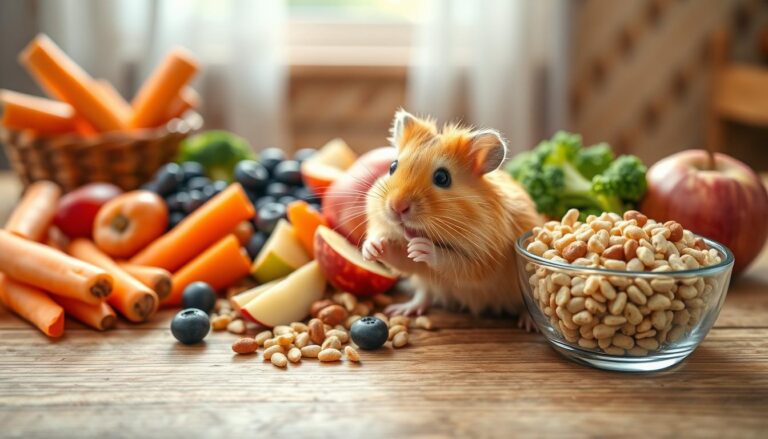
Dry pellets are the main food for hamsters, but fresh treats add important nutrients and water. Make sure these treats are no more than 10% of what your hamster eats each day. Adding these items helps keep your pet healthy and happy.
Recommended Vegetables for Daily Enrichment
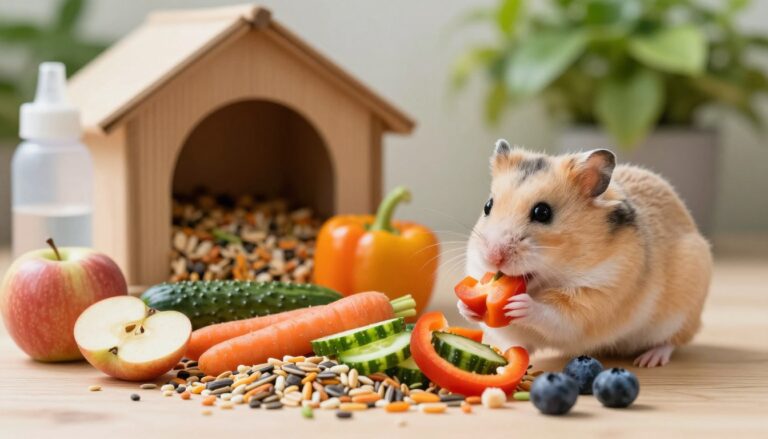
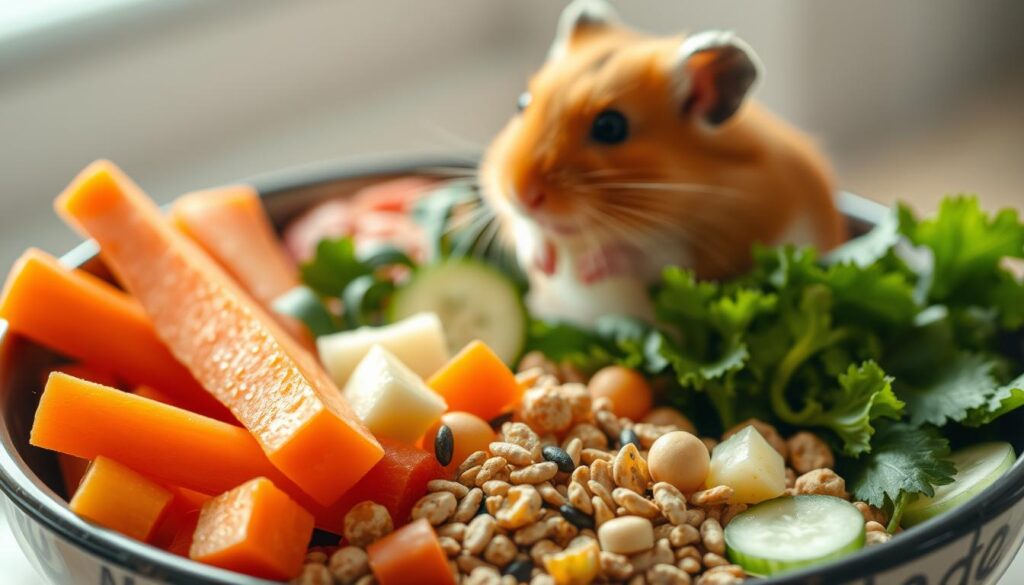
Vegetables add texture and variety to your hamster’s diet. Choose crunchy, water-rich veggies that help with natural gnawing. Always wash them well before giving small pieces.
- Broccoli florets
- Carrot slices
- Cucumber chunks
- Bell peppers (without seeds)
Fruit Portions and Sugar Content Considerations
Fruits are tasty but can cause weight gain if given too often. Limit fruit servings to small, occasional amounts. This helps avoid metabolic problems and keeps your hamster healthy.
Safe Fruits to Offer in Moderation
Choose fruits that are low in acidity and easy to digest for your hamster. Apples are good, but remove seeds and cores. Small amounts of strawberries or blueberries are okay, but only as a rare reward.
Vegetables That Support Digestive Health
Some veggies are great for your hamster’s digestive health. Dark, leafy greens like kale or spinach are full of fiber and vitamins. By changing these top foods for hamsters, you give your pet a variety of nutrients that go well with their best hamster food pellets.
Foods to Avoid to Prevent Health Complications
Keeping your hamster safe from harmful foods is key. Many kitchen items are toxic or life-threatening to small rodents. Knowing which foods to avoid is crucial for your pet’s health.
Toxic Foods That Are Dangerous for Hamsters
Some foods can cause serious harm or even death. Never give your hamster chocolate, caffeine, or alcohol. These are harmful because hamsters can’t process them.
“The health of your pet is a direct reflection of the choices you make at the dinner table.”
Common Human Foods That Cause Digestive Distress
Many human foods can upset a hamster’s stomach. Even if not deadly, they can cause long-term health problems. Always choose top foods for hamsters made for their needs.
Why Citrus and Onions Should Be Excluded
Onions and garlic harm hamsters by damaging their red blood cells. Citrus fruits are too acidic and can irritate their stomach. It’s best to keep these foods away to keep your pet healthy.
The Dangers of Sugary and Salty Snacks
High-sugar and high-fat snacks can lead to obesity and diabetes in hamsters. Too much salt is also bad for their kidneys. To keep your pet healthy, follow these hamster care tips about snacks:
- Avoid processed human snacks like chips or cookies.
- Do not offer candy or sugary fruit juices.
- Stick to fresh, approved vegetables instead of salty treats.
Best Practices for Feeding and Hydration
Creating a routine is key to a happy hamster. A balanced diet for hamsters keeps them healthy and active. A regular schedule also helps with digestion and reduces stress.
Establishing a Consistent Feeding Schedule
Hamsters are mostly active at night. So, feed them in the evening. This hamster feeding guide says timing is crucial, just like the food quality.
“A predictable environment is the foundation of good animal welfare, allowing your pet to anticipate their needs and feel secure in their habitat.”
Managing Portion Sizes to Prevent Obesity
Obesity is a big problem for hamsters. It’s often due to too much food or treats. Watch your hamster’s weight and use a small scoop for food every night.
- Offer a measured amount of high-quality pellets.
- Limit sugary treats to occasional rewards.
- Observe your hamster’s body condition to adjust portions as needed.
The Importance of Fresh Water Access
Drinking water is crucial for hamster care tips. Always have clean water available. Use a drip-proof bottle or a shallow, tip-proof dish. Check the water daily to keep it clean.
Cleaning Food Dishes and Removing Perishables
Keeping the cage clean is vital. Remove any uneaten food before it spoils. Clean food dishes with warm, soapy water weekly to keep your hamster’s home clean.
Conclusion
Feeding your pet a balanced diet is key. Mix high-quality pellets with fresh, safe veggies. These tips guide you in feeding your hamster right.
Choosing quality food greatly improves your pet’s life. Watch how different foods change their energy and digestion. Adjusting your diet based on these changes keeps your hamster healthy.
Sticking to a routine is crucial for your hamster’s health. Make sure they drink enough water and eat the right amount. These tips help your hamster live a long, happy life with you.
Share your knowledge with other hamster owners. Your effort to learn about nutrition shows how much you care. Keep finding new ways to make your hamster’s life better.