The Best Hamster Diet Plan for Your Pet’s Health
You look into those tiny, curious eyes and see the joy they bring to your home. These little friends depend on you for their happiness and longevity.
Hamsters usually live for 2 to 3 years. The right food is key to their health and happiness. A balanced hamster diet is essential for their daily energy.
Choosing a healthy hamster diet keeps your friend healthy and active. High-quality food ensures your pet enjoys life to the fullest. Let’s learn how to feed your companion right.
Key Takeaways
- Nutrition is the primary factor in your pet’s overall well-being.
- Proper care can help your companion reach its 2 to 3-year lifespan.
- A high-quality food plan serves as a shield against common health issues.
- Focusing on natural ingredients supports long-term vitality.
- Small adjustments to daily meals make a significant difference in health.
Understanding the Nutritional Needs of Your Hamster
To keep your pet healthy, you must first understand the biological needs of hamsters. These small animals have complex systems that require a variety of nutrients to thrive in captivity. Knowing what to feed a hamster is the first step toward ensuring a long and happy life for your furry companion.
Omnivorous Nature and Dietary Requirements
Hamsters are naturally omnivorous, meaning they consume both plant and animal matter in the wild. This biological classification dictates that a balanced diet for hamsters should never be limited to just seeds or grains. You should provide a diverse range of food sources to mimic their natural foraging habits.
By offering a mix of grains, vegetables, and occasional protein, you satisfy their instinctual drive to explore different textures and flavors. This variety helps prevent boredom and ensures they receive a broad spectrum of essential vitamins and minerals. Always aim for high-quality ingredients to maintain their overall well-being.
The Importance of Protein and Fiber
Protein serves as the building block for your hamster’s muscles and tissues, supporting their high energy levels. Without enough protein, your pet may struggle to maintain a healthy weight or recover from minor illnesses. You can find these nutrients in specialized mixes or through supplemental treats.
Fiber is equally vital for maintaining a healthy digestive tract. It keeps their gut moving efficiently and prevents common issues like constipation. A balanced diet for hamsters relies on the right ratio of these components to keep your pet active and alert throughout the night.
| Nutrient Category | Primary Function | Common Sources |
|---|---|---|
| Protein | Muscle growth and repair | Mealworms, seeds, legumes |
| Fiber | Digestive health | Timothy hay, leafy greens |
| Fats | Energy storage | Nuts, sunflower seeds |
| Carbohydrates | Immediate energy | Grains, oats, barley |
When considering what to feed a hamster, remember that consistency is key. By balancing these core nutrients, you create a stable environment for your pet to flourish. Always monitor their intake to ensure they are eating a variety of the provided food rather than picking out only their favorite pieces.
The Foundation of a Balanced Hamster Diet
A healthy hamster diet begins with knowing what fuels your pet’s day. Nutrient-rich foods give them the energy for a lively life.
When setting up their home, steer clear of cedar and unprocessed pine bedding. These can irritate your pet’s breathing, especially when they eat or store food.
Selecting High-Quality Seed Mixes
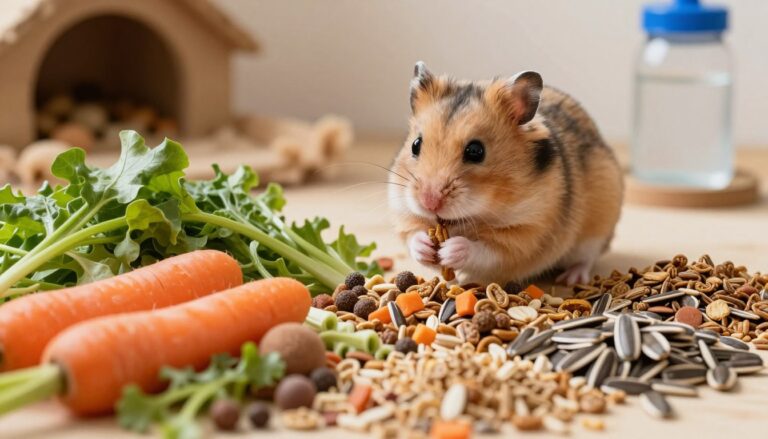
Choosing the best food for hamsters means looking beyond the packaging. A top seed mix should have a variety of grains, seeds, and dried legumes. This mirrors their natural diet.
Stay away from mixes with too many artificial dyes or sunflower seeds, which are too fatty. Opt for mixes with a balanced variety of proteins and complex carbs for better health.
Look for millet, oats, and barley in high-quality mixes. These offer the fiber needed for a healthy hamster diet. They keep their digestive system in top shape.
The Role of Foraging in Natural Nutrition
In the wild, hamsters spend a lot of time finding food. You can mimic this by scattering some of their hamster diet around their cage instead of using a bowl.
This encourages them to use their cheek pouches to carry food to secret spots. It’s great for their essential mental stimulation and physical activity, helping to prevent boredom.
By making mealtime an activity, you support their natural behavior. A hamster diet that includes foraging keeps them physically and mentally sharp.
Evaluating Commercial Options: Pellet Diet for Hamsters
Many pet owners find it hard to pick the best food for hamsters that stops selective eating. A loose seed mix can lead to pets only eating their favorite seeds. This leaves out important nutrients. A pellet diet for hamsters ensures every bite has the right mix of nutrients.
Benefits of Uniform Pellet Nutrition
Pellets are made to give the right amount of protein, fats, and fiber. This choice means your hamster gets a balanced diet that meets their needs. It also stops the risk of not getting enough nutrients because of picky eating.
| Feature | Seed Mix | Pellet Diet |
|---|---|---|
| Nutrient Consistency | Low | High |
| Selective Feeding | Common | None |
| Dental Wear | Moderate | High |
How to Transition Your Hamster to Pellets
Changing your pet’s food should be done slowly to avoid stomach problems. Start by adding a little bit of pellets to their food. Over seven to ten days, slowly add more pellets and less of the old food.
Watch your hamster closely during this time to make sure they like the new food. If they’re not sure, try adding a little water to the pellets to make them softer. Patience is key when introducing new foods to your small friend.
Monitoring Weight During Dietary Changes
Keeping your hamster’s weight stable is a good sign they’re adjusting well. Weigh them weekly with a small kitchen scale to check for big changes. A sudden weight loss means they might not be eating enough, while too fast a gain could mean too much food.
If you see big changes, talk to your vet to adjust the food amounts. Regular checks help make sure the new diet is good for your pet’s health and energy.
Incorporating Fresh Fruits and Vegetables
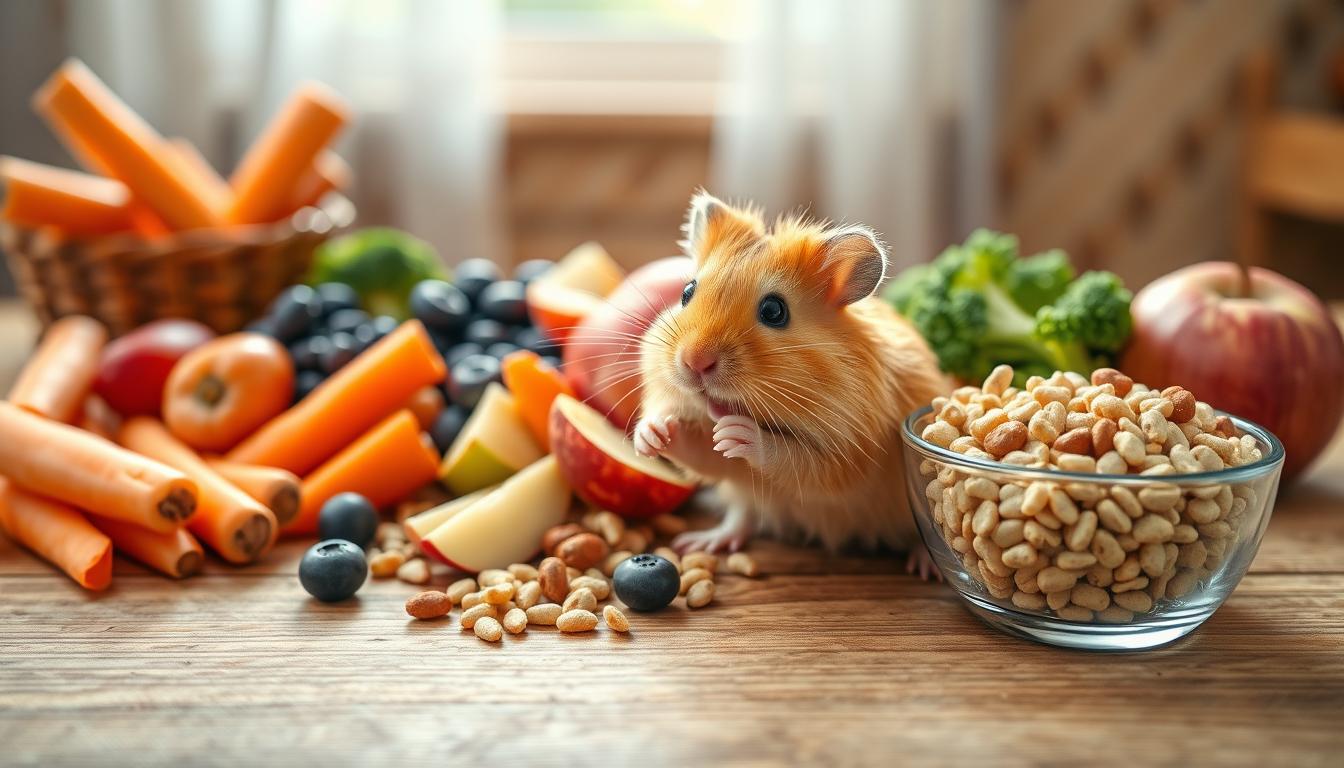
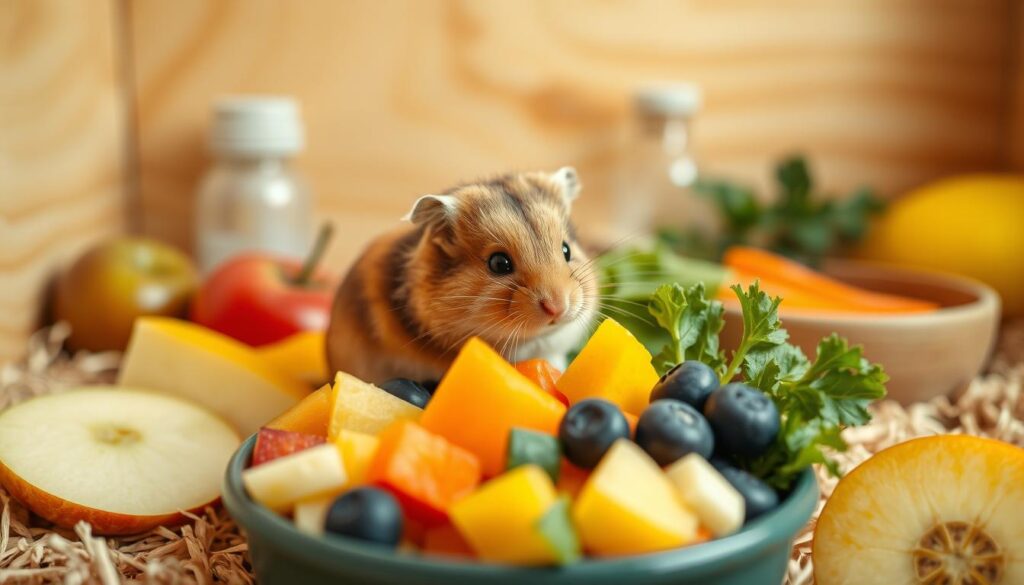
Learning what to feed a hamster beyond dry pellets is key for their health. Commercial mixes are a good start, but fresh produce adds important vitamins and minerals. Make sure fresh items are only 10% of their daily food to prevent digestive problems.
Safe Vegetables for Daily Feeding
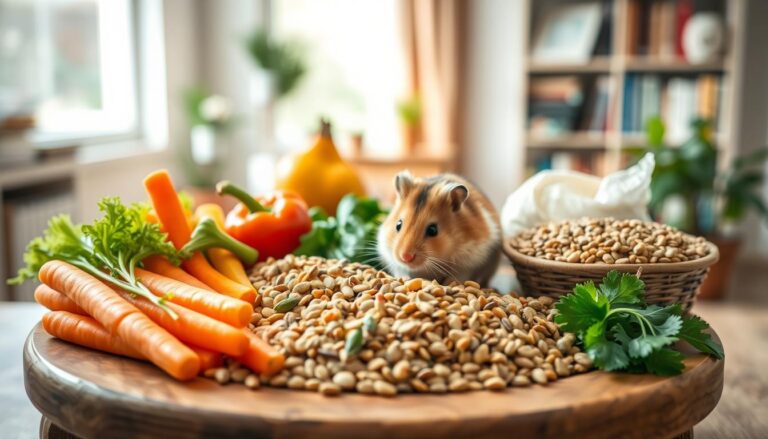
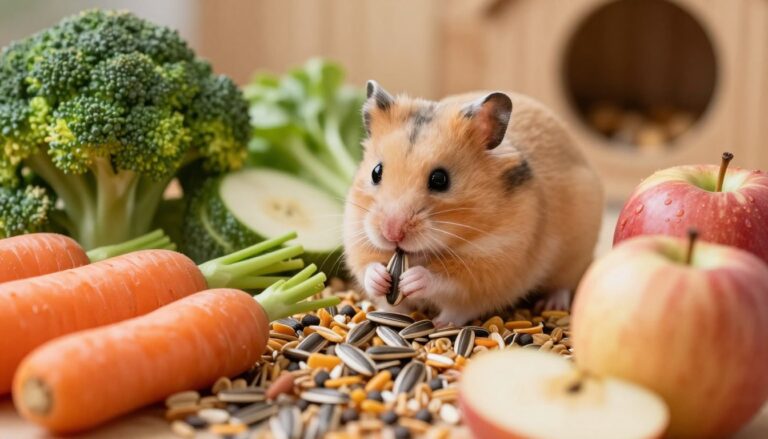
Vegetables are safer than fruits for daily snacks. You can give small pieces of broccoli, carrots, or cucumber for crunch and water. These are great for your homemade hamster food because they’re low in sugar and high in fiber.
Start with small amounts of new veggies to see how your hamster reacts. If they show signs of diarrhea or seem tired, stop the new food and talk to a vet. Adding these healthy snacks regularly is important.
Fruit Portions and Sugar Content
Fruits are tasty but high in sugar. Hamsters can get diabetes, so give fruits in very small amounts, about once or twice a week. Apples without seeds or tiny strawberry slices are okay in small amounts.
Preparation Tips for Fresh Produce
It’s crucial to prepare food safely for your pet. Always wash fruits and veggies well to remove harmful chemicals. Cut them into small pieces to avoid choking and to help your hamster store them in their cheek pouches.
| Food Item | Safety Status | Frequency |
|---|---|---|
| Carrots | Safe | 2-3 times weekly |
| Broccoli | Safe | 2-3 times weekly |
| Grapes | Avoid | Never |
| Onions | Toxic | Never |
Safe and Healthy Treats for Your Hamster
You can make your hamster’s life better with healthy treats. A balanced diet is key, but treats add mental stimulation and strengthen your bond. Some owners choose homemade hamster food for the best ingredients.
Protein-Rich Treats Like Mealworms
Hamsters are omnivores and need protein. Dried mealworms are great because they’re like the insects they find in the wild. They have essential amino acids for muscle health and energy.
When making homemade hamster food, add a few mealworms to their seed mix. Make sure to get mealworms from trusted pet stores to avoid parasites. Giving them out sparingly keeps your hamster looking forward to snack time.
Natural Chews for Dental Health
Hamsters’ incisor teeth grow all their lives. They need things to chew on to keep their teeth in check. Natural chews are crucial for their dental health.
Here are some safe options for their teeth:
- Apple wood sticks that are pesticide-free.
- Dried loofah slices which are soft yet firm enough for chewing.
- Untreated willow balls that provide both exercise and dental care.
Moderation and Frequency Guidelines
Even healthy snacks should be a small part of your hamster’s diet. Too much can cause obesity and nutritional problems, even with homemade hamster food. Treats should not be more than 10% of their daily food.
Give treats only a few times a week, not every day. Small portions keep your hamster interested in their main food. Consistency and moderation are important for your hamster’s long, healthy life.
Foods to Avoid for a Healthy Hamster Diet
A high-quality pellet diet for hamsters is key. But, some common foods can be deadly. Knowing what to feed a hamster and what to avoid is crucial for their health.
Toxic Foods and Potential Hazards
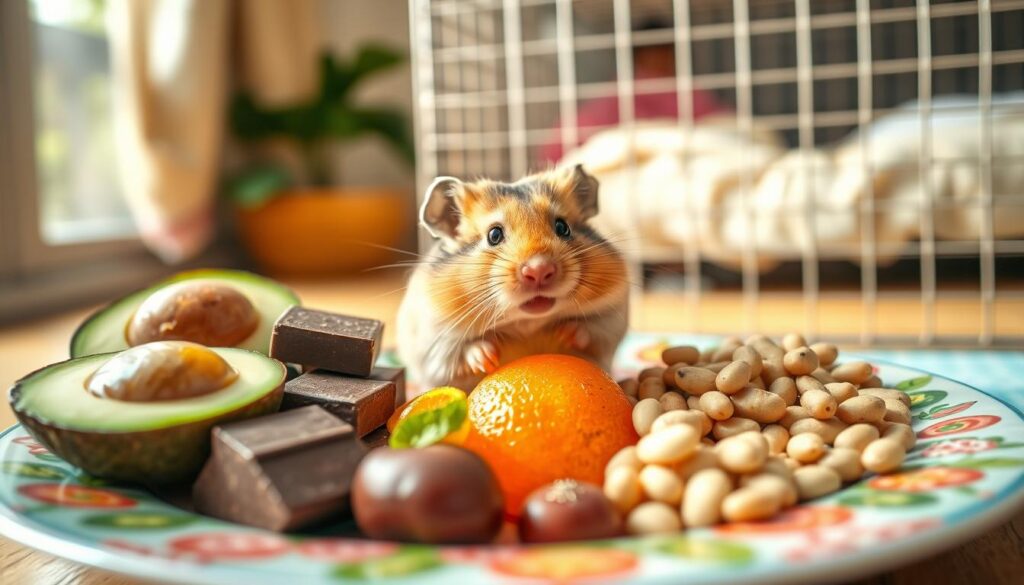
Some foods are toxic to small rodents. Never give your hamster chocolate, caffeine, or alcohol. These can harm their organs or heart.
Also, stay away from onions, garlic, and raw potatoes. They can harm your hamster’s blood or upset their stomach.
“The health of your pet is a direct reflection of the care you take in selecting their daily meals.”
Why Human Junk Food Is Dangerous
Human junk food has too much salt, sugar, and unhealthy fats. These are bad for a hamster’s diet and can cause obesity.
Hamsters can get diabetes from too much sugar. Maintaining a strict diet helps prevent this and keeps them healthy.
Recognizing Signs of Dietary Distress
Even with good intentions, accidents can happen. Watch your hamster for any sudden changes in behavior or health.
- Lethargy: If your hamster seems tired or unresponsive, it might be sick.
- Stool Consistency: Changes in waste, like diarrhea or constipation, show a bad diet.
- Appetite Loss: If your hamster won’t eat, it’s a big warning sign.
If you see these signs, take away new foods and see a vet. Proactive observation helps keep your hamster safe.
Establishing a Consistent Feeding Schedule
Hamsters are most active at night. So, it’s key to feed them then. This lets them forage naturally. A consistent routine also keeps them feeling safe and helps their metabolism stay steady.
Determining Daily Portion Sizes
Getting the right amount of food is crucial for a healthy hamster diet. Too much can cause obesity and waste. Too little means they miss out on nutrients. Adult hamsters need about one to two tablespoons of good food each day.
For a balanced diet for hamsters, follow these tips:
- Start with a high-quality seed mix or a pellet diet for hamsters.
- Add small, fresh veggies for variety.
- Watch your pet’s weight and adjust food as needed.
The Importance of Fresh Water Access
Drinking water is as important as food for your pet’s health. Make sure they always have clean, fresh water. Use a secure water bottle or a shallow, tip-proof dish that’s cleaned daily to stop bacteria.
Managing Hoarding Behaviors
Hamsters naturally hoard food. Even with a balanced diet for hamsters, they’ll hide food in their bedding. This is normal and shouldn’t be stopped.
Still, check their hiding spots often to remove any bad food. Keeping the cage clean is key. If your pet hoards too much pellet diet for hamsters, you might need to cut back a bit to avoid spoilage.
Conclusion
Feeding your pet a balanced diet is key to their health. You now know how to pick the best food for hamsters. This meets their special needs.
Keeping a regular feeding schedule is important. It helps your hamster feel secure. Offer high-quality pellets, fresh veggies, and sometimes protein. Adding homemade hamster food can make meals more interesting.
Regular vet visits are crucial. An exotic vet can give advice specific to your hamster. They can help you spot any health problems early.
By focusing on good nutrition, you’ll have a happy, lively pet. Watch what your hamster likes and stick to the main diet rules. Every meal you give them can make a big difference in their life.