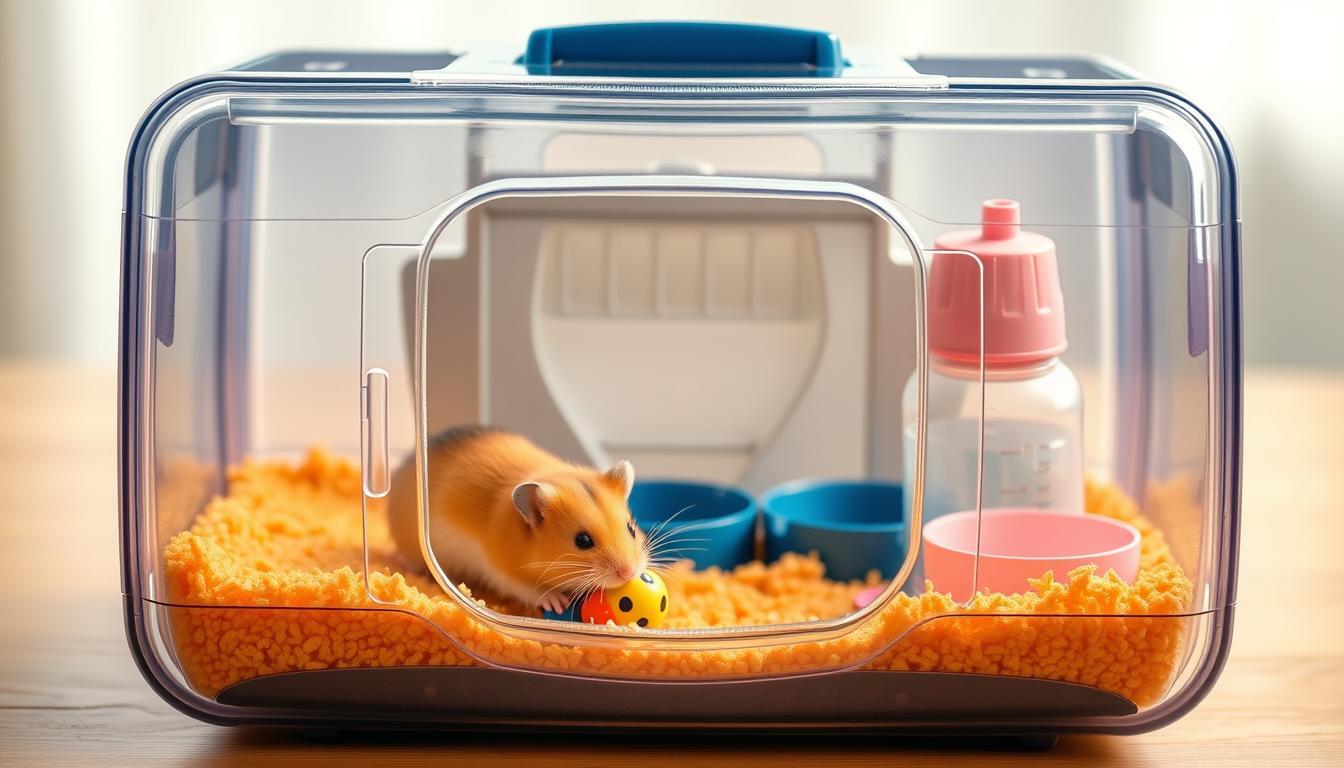
Choosing the Perfect Hamster Takeout Cage for Travel
Do you worry when you have to take your hamster to the vet or a new home? Your heart races thinking about your pet’s safety. The right hamster takeout cage is more than just convenient. It’s a safe space that helps your pet stay calm.
Getting the best hamster cage for takeout means your pet stays relaxed on trips. A good carrier stops escapes and keeps air flowing. By picking a top-rated hamster cage for takeout, you ensure a worry-free journey for both of you.
Key Takeaways
- Prioritize ventilation and security features to keep your pet safe.
- Choose a size that allows for comfort without excessive movement.
- Look for durable materials that withstand frequent travel.
- Ensure the latching mechanism is escape-proof for added safety.
- Select a design that is easy to clean after your journey.
Understanding the Importance of a Proper Hamster Takeout Cage
When you take your hamster on a trip, the cage they use is very important. At home, they have a big space. But for travel, they need something different. A hamster takeout cage keeps them safe and comfy while you’re moving.

Why Standard Cages Are Unsuitable for Travel
Most hamster cages are made for staying put, not for moving. Hamsters need lots of space, but these cages are hard to carry. They’re also not built to handle car rides well.
Standard cages have bars that are too wide or tubes that can be a risk. A hamster cage for on-the-go use is safer. It’s made to handle bumps and has strong locks to keep your pet in.
- Structural Integrity: Travel carriers are built to withstand bumps and vibrations.
- Escape Prevention: Specialized locks keep your pet safely contained.
- Compact Design: They fit easily on a car seat or in a footwell.
The Role of Portability in Reducing Pet Anxiety
Hamsters get scared easily and like what’s familiar. A portable cage is like a secure sanctuary for them. It keeps them safe from loud noises and new sights.
Choosing a good hamster takeout cage means your pet stays calm. They know what to expect, which helps them feel less scared.
Getting a proper hamster cage for on-the-go use shows you care. It makes the trip less stressful for your hamster. They’ll feel safe until you arrive at your destination.
Key Features to Look for in a Portable Hamster Habitat
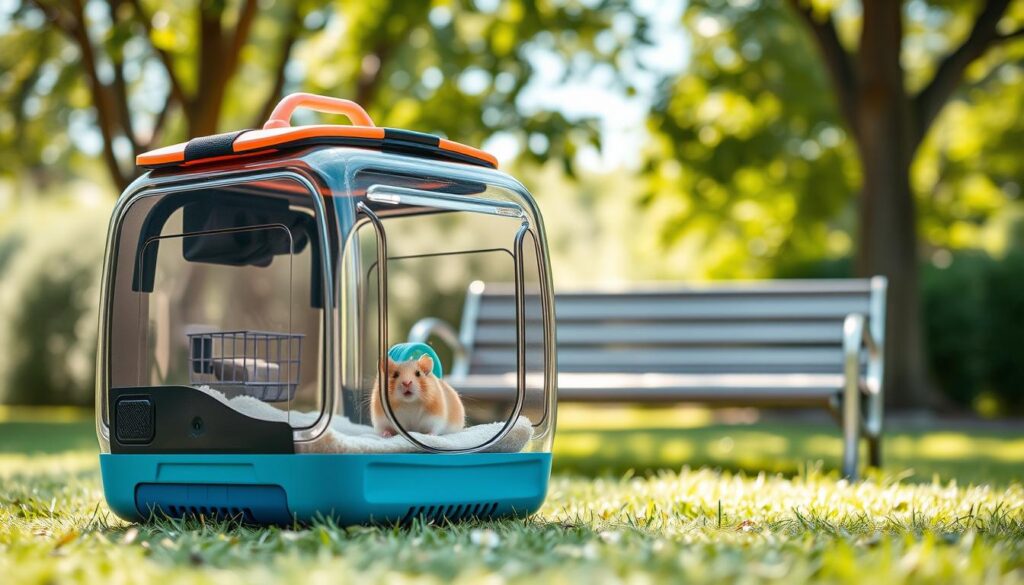
When choosing a portable hamster habitat, focus on safety and comfort. The best hamster cage for takeout is more than a small box. It needs to be durable and safe for your pet. A good habitat makes traveling easier.
Secure Locking Mechanisms for Escape Prevention
Hamsters love to escape, especially in new places. A reliable portable hamster cage for takeout has strong latches. These latches should be hard for your pet to open from inside.
Stay away from carriers with simple lids. Look for ones with snap-lock clips or screw-on tops. These keep your pet safe during travel.
Size Requirements for Short vs Long Trips
The trip’s length affects your pet’s space needs. For vet visits, a small carrier works well. But for longer trips, a convenient hamster takeout cage needs more room.
For long trips, choose a cage that’s big enough for hiding spots and water. A wire-top cage with a plastic base is great. It’s well-ventilated and keeps your hamster cool and dry.
Accessibility for Easy Cleaning and Feeding
A hamster cage with easy access for takeout is key for quick care on the go. Top-loading doors are best. They let you reach inside without opening the whole lid.
Many top-rated hamster cage for takeout models have side panels for water bottle refills. Easy access makes long trips less stressful. Here’s a comparison to help you choose.
| Feature | Short Trip Carrier | Long Trip Habitat |
|---|---|---|
| Ventilation | Basic side slots | Wire-top with deep base |
| Locking Type | Simple snap-clip | Reinforced dual-latch |
| Access Point | Top-only | Top and side doors |
| Space Capacity | Minimal | Moderate for enrichment |
Evaluating Safety and Ventilation Standards
When you’re getting ready for a trip, keeping your pet safe is key. Choosing the right portable hamster cage for takeout is more than just picking the right size. You need to check safety and ventilation to keep your pet healthy on the journey.
Ensuring Adequate Airflow in Enclosed Spaces
Good ventilation is crucial to stop breathing problems during travel. Hamsters can’t handle still air well. So, your hamster habitat with takeout feature must have vents or mesh panels.
- Choose carriers with vents on different sides.
- Make sure air flows well, even when the carrier is against a seat.
- Don’t block the vents with blankets or heavy bags.
Temperature Regulation During Transit
Hamsters can get heatstroke easily, especially in small, hot places. Always check the carrier’s temperature to avoid overheating.
Don’t put the carrier in the sun or near heaters. In hot weather, use a pet-safe cooling stone to keep your hamster cool.
Avoiding Toxic Materials and Sharp Edges
The carrier’s design is as important as its airflow. Check for sharp edges or loose wires that could hurt your hamster.
Stay away from wire floors, as they can harm your hamster’s feet. Choose a solid floor for safety and comfort. Also, make sure all plastics are safe for your hamster to chew on.
By focusing on these safety points, you can be sure your hamster habitat with takeout feature is safe. A good portable hamster cage for takeout is like a safe haven for your pet, keeping them calm until you arrive.
Comparing Materials for Durability and Comfort
Finding the right balance between durability and comfort is key for a great trip with your small pet. The material of your carrier affects how safe and calm your hamster feels on the road. It’s important to weigh the pros and cons of each option for a smooth journey.
Benefits of Hard Plastic Carriers
Many choose hard plastic carriers because they are affordable hamster takeout cages. They are easy to clean and offer strong protection against bumps. But, they can be chewed by hamsters and may get damaged over time.
For a durable hamster takeout cage, look for one with strong latches. Even though they are tough, hamsters might chew through them. Always check for sharp edges after each trip to keep your pet safe.
The Pros and Cons of Mesh-Sided Travel Bags
Mesh-sided bags are light and convenient hamster takeout cages for short trips. They keep your pet cool in warm weather and are soft, reducing the risk of injury. However, they don’t offer the same protection as plastic containers.
These bags might not be the best choice if your hamster tries to chew through the mesh. They work best when you can watch your pet closely during travel.
Choosing Non-Slip Flooring for Stability
The floor of your carrier is crucial for your pet’s comfort. A slippery base can make your hamster slide around, causing stress. Always add non-slip material or thick bedding for a stable base.
| Material Type | Durability | Ventilation | Ease of Cleaning |
|---|---|---|---|
| Hard Plastic | High | Moderate | Excellent |
| Mesh Fabric | Low | Excellent | Moderate |
| Reinforced Canvas | Moderate | Good | Good |
Essential Supplies to Pack for Your Hamster’s Journey
When you’re getting ready for a trip, it’s key to pack the right stuff for your hamster habitat with takeout feature. Your goal is to keep your pet comfortable and stress-free. The right supplies help make sure your hamster is safe and happy during the journey.
Selecting the Right Bedding for Travel
The bedding is the base of your pet’s comfort. Choose soft, absorbent paper-based bedding that keeps its shape. Avoid cedar or pine shavings that aren’t kiln-dried, as they can harm your hamster’s breathing.
High-quality, dust-free bedding keeps the air clean in your hamster habitat with takeout feature. This choice prevents irritation and ensures your pet can breathe easily while traveling.
Hydration Solutions That Prevent Spills
Keeping your hamster hydrated without making a mess is a big challenge on the go. Traditional water bowls can spill, making the bedding damp and uncomfortable. Here are some better options:
- Drip-proof water bottles made for small travel carriers.
- Hydration gels that offer moisture without the risk of spills.
- Fresh vegetables like cucumber slices for extra hydration on short trips.
Test your chosen hydration method before you leave to make sure it’s secure. A dry, clean space is crucial for your pet’s health on any journey.
Packing Familiar Scents to Calm Your Pet
Travel can be scary for small animals. Packing a bit of their used bedding from their main home can help. This familiar scent makes them feel more at ease in a new place.
By adding these scents to your hamster habitat with takeout feature, you make your pet feel more at home. This simple trick can greatly reduce their anxiety and help them settle down faster during the trip.
Preparing Your Hamster for Stress-Free Travel
A successful trip starts long before you load your gear into the car. Choosing a hamster cage for on-the-go use is key. It keeps your pet safe and comfortable. Keep the environment between 65–75°F (18–24°C) to avoid heat stress or chilling.
Acclimating Your Hamster to the Carrier Before Departure
Don’t wait until the day of your trip to introduce your pet to their travel home. Place the carrier in their play area with the door open. Adding a few favorite treats or familiar bedding inside makes it inviting.
Using a hamster cage for on-the-go use consistently is important. Let your hamster sleep or eat in the carrier at home. This builds confidence and reduces anxiety on the travel day.
Managing Environmental Noise and Light
Hamsters are sensitive to noise and light. During transit, cover the carrier with a light, breathable cloth. This blocks sudden light or movement, making your pet feel secure.
“The secret to a calm pet during travel is minimizing sensory overload by creating a predictable, cozy sanctuary within their carrier.” — Anonymous Pet Care Expert
Monitoring Your Hamster During Rest Stops
Check on your pet often to ensure they’re doing well. At every rest stop, peek inside to see if they’re breathing normally. Make sure their water source is secure and hasn’t leaked.
Use the following table to organize your travel preparations and ensure nothing is overlooked before you depart.
| Preparation Task | Frequency | Importance |
|---|---|---|
| Temperature Check | Every 2 Hours | High |
| Hydration Status | Every Stop | Critical |
| Carrier Inspection | Before Departure | High |
| Stress Observation | Ongoing | Medium |
Common Mistakes to Avoid When Selecting a Travel Carrier
Choosing the wrong travel habitat can stress you and your hamster. It’s tempting to pick the first option, but taking time to check the design is key. Whether you’re looking for an affordable hamster takeout cage or a durable hamster takeout cage, knowing common mistakes can make your trip smoother.
Overcrowding the Takeout Cage
It’s natural to want your pet to have lots of toys and accessories. But stuffing a travel carrier too much is a big mistake. A crowded space makes it hard for your hamster to move and can cause items to move around during travel. Always put safety first, not extra comfort items, when picking a travel cage.
Ignoring the Need for Proper Visibility
Many forget to watch their pet during the trip. If you pick a carrier with dark walls or small windows, you’ll find it hard to check on your hamster. A hamster cage with easy access for takeout should also let you see clearly so you can spot any problems or signs of heat.
Choosing Carriers That Are Too Difficult to Clean
One big problem is when a carrier has tiny doors that are hard to open with your hands. If you can’t get inside easily, cleaning is a hassle and talking to your pet during stops is almost impossible. Stay away from designs that look good but are hard to use.
| Common Mistake | Potential Consequence | Recommended Solution |
|---|---|---|
| Overcrowding | Risk of injury from shifting items | Keep accessories minimal |
| Poor Visibility | Inability to monitor pet health | Choose clear or mesh panels |
| Small Openings | Difficult cleaning and handling | Select wide-door designs |
Conclusion
Choosing the right hamster takeout cage is key for pet owners who travel. It shows you care about your pet’s safety and happiness.
Look for cages that are safe, well-ventilated, and easy to get to. This keeps your hamster comfy on trips. Using strong materials and a steady setup helps reduce your pet’s stress.
Brands like Kaytee or Ferplast make great travel cages. They ensure your pet is safe and comfortable. This gives you confidence in your pet’s care while traveling.
With the right gear, traveling with your pet can be fun. Share your experiences with different carriers below. Your stories can help others choose the best for their pets.