
Top Tips for Buying a Dwarf Hamster Cage You’ll Love
Bringing a tiny new friend into your home is a truly heartwarming experience. You want to give them a safe, secure, and happy place every day.
First, understand that these animals are naturally solitary and territorial. They prefer living alone to avoid stress or fighting. So, choosing the right habitat is key for their well-being.
This buying guide for dwarf hamster cage helps you pick the best one. Focus on comfort and space to find the best dwarf hamster cage for you.
Spending time on this choice means your pet will thrive in a space made just for them. Let’s find out how to make a cozy sanctuary you both will love.
Key Takeaways
- Hamsters are solitary creatures that thrive best when kept alone.
- Territorial behavior makes individual housing a necessity for peace.
- Prioritize floor space over height to ensure your pet stays active.
- Proper ventilation is a critical feature for a healthy living environment.
- Selecting the right habitat prevents stress and promotes long-term happiness.
Understanding the Essential Requirements for a Dwarf Hamster Cage
Before getting a home for your small friend, think about safety and environment. A dwarf hamster cage is key for your pet’s health and happiness. This buying guide for dwarf hamster cage will help keep your pet safe from other animals and dangers.
Prioritizing Safety and Security
Your pet’s safety is the top thing to consider. The Animal Humane Society says hamster cages should be at least 15 gallons. This size lets your pet move naturally. A top-rated dwarf hamster cage also has a secure lock to stop it from opening by accident.
Preventing Escapes Through Bar Spacing
Dwarf hamsters can fit through very small spaces. Look for bars that are no more than 0.5 inches apart. If the bars are too wide, your hamster might get stuck or escape, which is very dangerous.
Selecting Non-Toxic Materials
Hamsters like to chew on everything, including their cage. Choose a dwarf hamster cage made from safe, chew-proof materials like powder-coated metal or glass. Stay away from cheap plastics that can break into sharp pieces when chewed.
Ensuring Proper Airflow and Environment
Good airflow is crucial to avoid ammonia buildup from urine, which can harm your hamster’s breathing. A good cage lets air circulate well without making your hamster cold. Keeping a clean, stable environment is the best way to ensure your pet stays healthy for a long time.
Evaluating Different Types of Dwarf Hamster Cage Designs
Finding the best dwarf hamster cage means looking at how materials affect your pet’s life. Each design has its own benefits, like better visibility, air flow, and cleaning ease. By considering these, you can pick a cage that fits your budget and meets your hamster’s needs.
Glass Aquariums and Terrariums
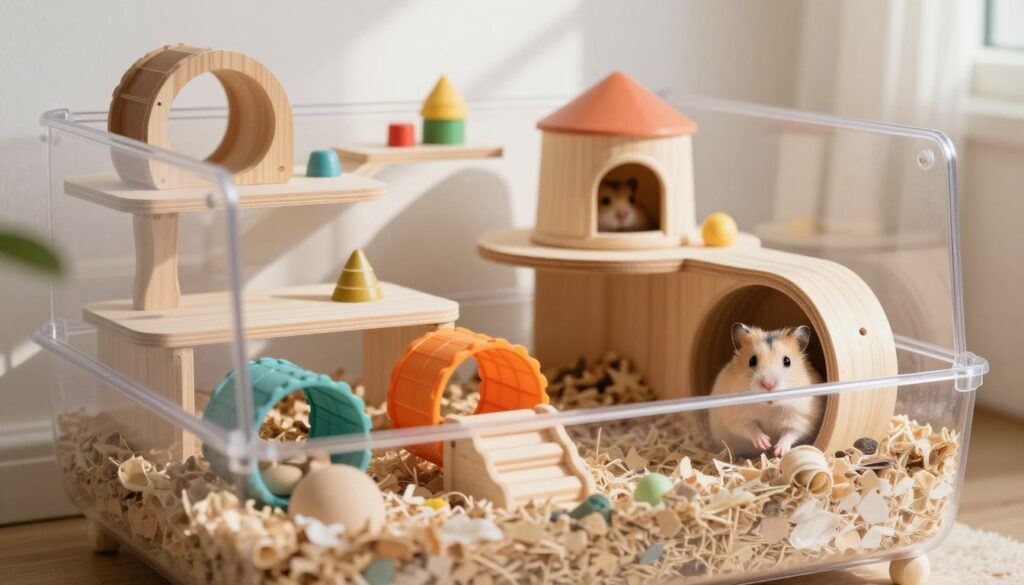
Glass cages are loved for their clear views of your pet. They have solid walls, making them great for hamsters that burrow. Plus, they keep bedding in place, avoiding messes on your floor.
But, make sure the top has a mesh lid for air. Without it, moisture can build up, harming air quality. Glass tanks are often seen as a top-rated dwarf hamster cage for their clean look.
Wire Cages with Solid Bases
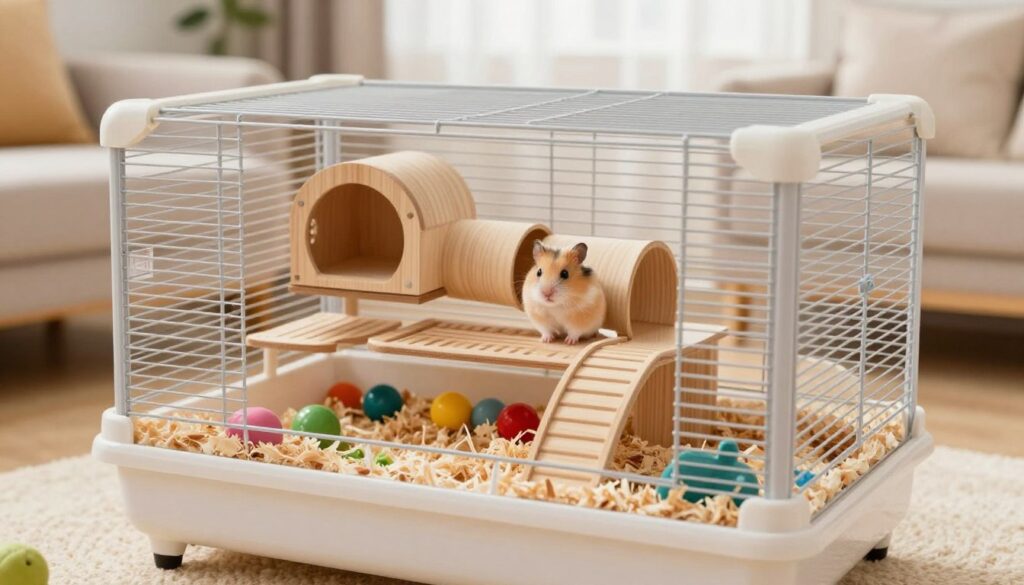
Wire cages offer great ventilation for your pet. They let in fresh air, keeping the environment dry and healthy. Many like them because they’re light and easy to move.
But, there’s a risk of bar chewing. This can harm your hamster’s mouth or nose. Make sure the wire gaps are small enough to keep your pet safe.
Modular Plastic Habitats
For an affordable dwarf hamster cage, consider modular plastic systems. They come with colorful tubes and tunnels for exploration. They’re light, easy to set up, and perfect for beginners.
Pros and Cons of Expandable Systems
Expandable systems grow with your pet. You can add more units for a bigger space. The main plus is flexibility, letting you adjust the layout as needed.
But, cleaning these systems can be tough due to many parts. Some plastic tubes might not breathe well if too long or narrow. Always watch your pet to ensure they have enough room to move freely.
Selecting the Right Size and Ventilation for Your Pet
It’s surprising how much space a small creature needs to be happy and healthy. Dwarf hamsters are active and need lots of room to move, burrow, and explore at night.
Why a Spacious Dwarf Hamster Cage Matters
A spacious dwarf hamster cage is key to avoiding stress. Without enough room, hamsters can get “cage rage.” This shows as bar-biting, constant pacing, or being very tired.
“The quality of a pet’s life is directly tied to the environment we provide, ensuring they have the freedom to express natural behaviors.”
Enough space lets your pet have areas for sleeping, eating, and digging. This setup is like their natural home and keeps them active.
Calculating Minimum Floor Space Requirements
When looking for a new home, focus on the floor area, not height. Experts say your hamster needs at least 360 square inches of floor space to be happy.
If you want an affordable dwarf hamster cage, choose ones with a big, flat base. Stay away from tall, narrow cages that don’t offer enough running space.
The Importance of Vertical vs. Horizontal Space
It’s tempting to get a tall cage with lots of levels. But, horizontal space is more important for dwarf hamsters. They love to run on flat surfaces.
- Horizontal space allows for natural foraging behaviors.
- Deep bedding can be added to the base for burrowing.
- Wide floor plans make it easier to place large, safe exercise wheels.
Managing Ventilation in Enclosed Habitats
If you pick a glass or plastic habitat, make sure it has good airflow. Poor air can lead to ammonia buildup and health problems.
Always choose a dwarf hamster cage with mesh lids or side vents. This helps keep the air fresh and prevents bad bacteria in the bedding.
Essential Dwarf Hamster Cage Accessories and Bedding Options
Your pet’s happiness depends on the accessories and bedding you choose. A stimulating environment keeps them active, healthy, and sharp.
Choosing the Best Dwarf Hamster Cage Bedding Options
It’s important to provide a deep layer of substrate for your pet’s natural instincts. Aim for at least 8 inches of bedding to let them dig and build nests.
Paper-Based vs. Aspen Shavings
When picking the best dwarf hamster cage bedding, you’ll choose between paper-based products and aspen shavings. Paper bedding is soft and great for burrowing.
Aspen shavings are also popular because they’re dust-free and good for tunnels. But, avoid cedar or pine shavings as they can harm your pet’s breathing.
| Bedding Type | Absorbency | Tunnel Stability | Safety Level |
|---|---|---|---|
| Paper-Based | High | Moderate | Excellent |
| Aspen Shavings | Moderate | High | Good |
| Pine/Cedar | Low | Low | Unsafe |
Selecting Appropriate Exercise Wheels
A solid-surface wheel is a must for any dwarf hamster cage. Wire or mesh wheels can harm your pet’s feet, so choose a smooth wheel.
The wheel should be big enough so your hamster doesn’t hurt their back. A diameter of at least 8 inches is best to avoid spinal problems.
Adding Enrichment and Hiding Spots
Adding various hideouts is key to preventing boredom. It makes your pet feel safe and secure, just like in the wild.
Safe Materials for Chewing and Climbing
Hamsters’ teeth grow continuously, so they need safe chewing materials. Use untreated wood, apple sticks, or cardboard tubes to keep their teeth in check.
When picking items for your dwarf hamster cage bedding options, make sure climbing structures are stable. Avoid high platforms that could be dangerous for your pet.
Conclusion
Your care makes a big difference in your small friend’s life. A big cage is key for a happy, active hamster. It lets them burrow and climb easily.
Keeping things regular is important for your hamster’s health. Clean their cage often to keep it fresh and calm. Using good accessories, like those from Niteangel, keeps them entertained and smart.
Watch how your hamster moves around. Change their space to fit their personality and energy. Share your ideas with others to help improve care for all hamsters. Your hard work keeps your pet happy and safe at home.