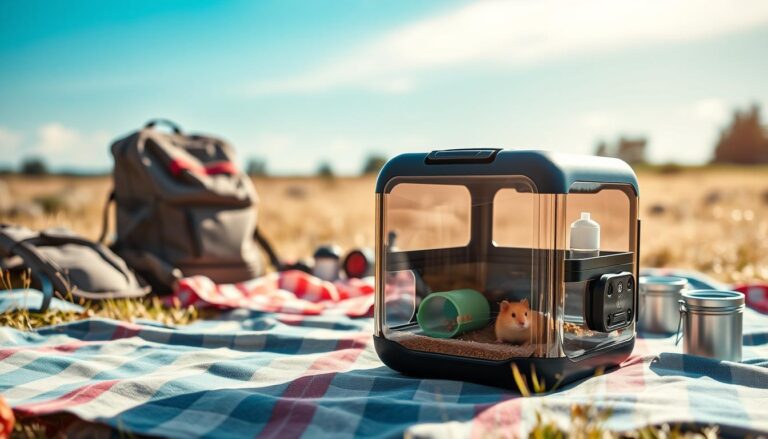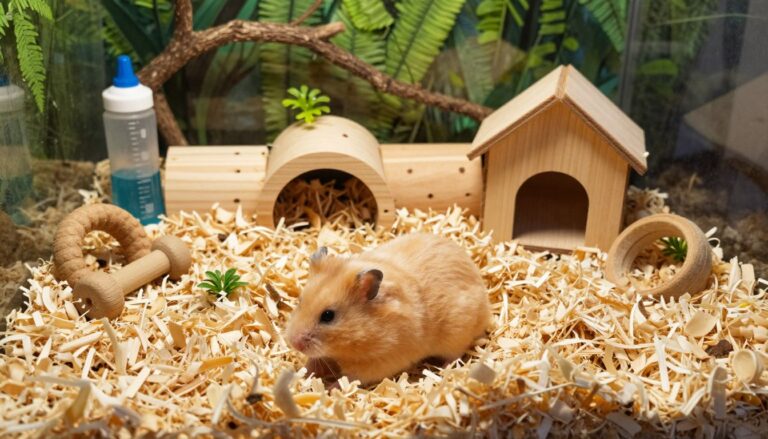

Hamster Takeout Cage Tips for Safe and Comfortable Travel
Taking your small pet on a journey can feel overwhelming. You worry about their stress levels and safety. But, with the right preparation, you can make the trip smooth for your furry friend.
A specialized hamster takeout cage is key to keeping your pet safe during travel. It gives your pet the stability they need to feel protected on the road.
By focusing on comfort and ventilation, your pet will arrive at their destination healthy. Learning these travel basics lets you enjoy your time together without worry. Let’s explore how to make every trip a safe and pleasant adventure for your pet.
Key Takeaways
- Select a secure carrier designed specifically for small animal transport.
- Prioritize proper ventilation to keep your pet comfortable during the ride.
- Minimize movement by securing the carrier firmly in your vehicle.
- Include familiar bedding to reduce stress through comforting scents.
- Monitor your pet closely throughout the journey to ensure their well-being.
Understanding the Importance of a Proper Hamster Takeout Cage
When you need to move your pet, a proper hamster takeout cage is crucial for their safety. Standard living enclosures are often too heavy or hard to move safely. A specialized carrier keeps your pet safe while you’re on the move.
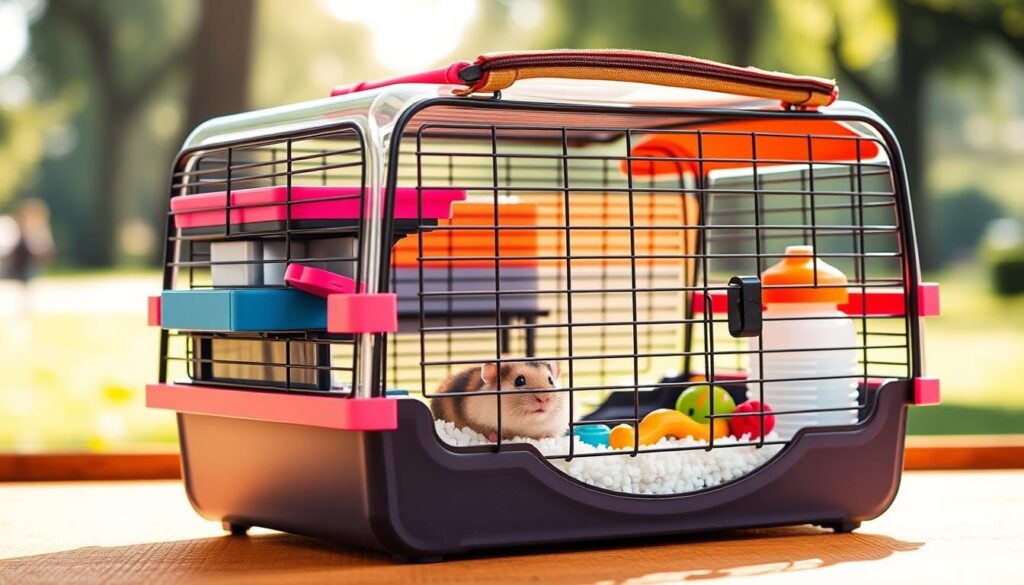
Choosing the right hamster habitat options for travel is key to keeping your pet healthy. Using makeshift containers can lead to bad air and health problems. A dedicated carrier ensures good air and keeps things clean during your trip.
“The safety of a small animal during transit is directly linked to the quality of the enclosure provided, as stress and poor air quality are the primary risks to their well-being.”
Look for safe hamster cage designs with strong locks to prevent escapes. Unlike cardboard boxes or weak plastic bins, these carriers can handle car movements. Here’s why a dedicated carrier is better than common household items.
| Feature | Makeshift Container | Dedicated Takeout Cage |
|---|---|---|
| Ventilation | Poor/Inconsistent | Optimized Airflow |
| Security | High Escape Risk | Locking Mechanisms |
| Durability | Low/Fragile | Impact Resistant |
| Visibility | Limited | Clear Observation |
Getting a top-notch hamster takeout cage is worth it for your pet’s comfort. By picking travel gear made for hamsters, you avoid stress and health risks. Make sure your carrier is up to the task of safe and comfy transport.
Selecting the Right Size and Material for Your Travel Carrier
When you’re getting ready for a trip, the carrier is your hamster’s home away from home. Choosing the right hamster cage for travel is key to keeping your pet safe and calm. Travel cages focus on being secure and easy to carry, not just fancy.

Evaluating Plastic Versus Wire Mesh Carriers
Plastic carriers are often the most durable hamster cages for travel. They block drafts and keep your pet safe from outside sights. But, make sure the plastic is thick to stop your hamster from chewing on it.
Wire mesh carriers let in more air, which is good in warm weather. But, be careful because hamsters can try to escape or get hurt if the bars are too far apart. Many top rated hamster cages for travel have a solid plastic bottom and a secure wire top.
“The safety of your small pet depends entirely on the quality of the environment you provide during transit, making the selection of materials a critical decision for every owner.”
Determining Appropriate Dimensions for Short and Long Trips
Even for short trips, following hamster cage size guidelines is crucial. Syrian hamsters need at least 155 square inches of space to move around. Don’t choose a small cage, as it can stress your hamster out.
For longer trips, more space is needed for a water bottle and a hideout. Make sure the cage is big enough for your hamster to stretch out. Always check your car’s space before buying to make sure the carrier fits well.
Preparing the Interior for Maximum Comfort
You can turn any travel carrier into a soothing sanctuary for your small pet. The right interior choices are key. By picking the right hamster habitat options, your pet stays dry and stable on the move.
Choosing Safe Bedding Materials for Travel
The bedding you choose is crucial for comfort. Look for materials that soak up spills to keep your hamster dry. Soft, paper-based bedding works best because it absorbs road vibrations well.
Stay away from cedar or pine shavings, as they can irritate your hamster’s lungs. Use dust-free paper bedding instead. It cushions your pet and keeps them safe when the car hits a bump.
Securing Essential Accessories Without Creating Hazards
Even with durable hamster cages, securing accessories is essential. Shifting items can hurt your pet. Don’t put heavy ceramic bowls or big wooden houses in the carrier, as they can be dangerous.
Choose light, plastic-free items that can be clipped to the carrier’s sides. Stability is key for your hamster’s calm. Fewer loose items mean less stress for your pet.
Step-by-Step Guide to Setting Up Your Hamster Takeout Cage
Setting up your hamster takeout cage should be easy and stress-free for your pet. Focus on keeping things clean and stable. This makes choosing the right hamster cage a breeze, putting your pet’s comfort first.
Cleaning and Sanitizing the Carrier Before Use
First, clean the carrier well before your pet uses it. Use a mild, pet-safe disinfectant to clean all surfaces. This removes dust and any leftover smells from storage.
Keeping the carrier clean shouldn’t be hard. Most modern carriers have easy-to-use latches. These let you clean the base and lid quickly, without needing tools or complicated steps.
Layering Bedding to Absorb Vibrations and Spills
Bedding is key to keeping your hamster comfy on the move. It should be thick and soft, to soak up any bumps and spills.
- Choose paper-based bedding for the best absorption.
- Make sure the bedding is packed tightly to stay in place.
- Add a bit of familiar nesting material to help your hamster feel at ease.
This bedding also catches any spills, keeping your pet dry. This prevents them from getting cold or wet.
Positioning Water and Food Sources Securely
Keeping your supplies safe is crucial for a smooth trip. Stay away from heavy ceramic bowls that could tip over and hurt your pet.
Go for lightweight, clip-on accessories instead. These attach to the carrier’s side, keeping food and water within reach without taking up too much space. By paying attention to these details, you’re creating the perfect hamster cage for any journey.
Managing Temperature and Ventilation During Transit
Keeping your hamster’s carrier at a stable temperature is key for their health on trips. Hamsters are very sensitive to changes in their environment. You need to control their surroundings to prevent stress and illness.
Preventing Overheating in Warm Weather
Hamsters can get heat exhaustion if it’s too hot in their carrier. Always keep the carrier out of direct sunlight. The sun can make a plastic carrier very hot, very fast.
Check your hamster for signs of heat stress, like being very tired or breathing fast. If it’s really hot, put a frozen water bottle in the cage. Wrap it in a sock so your hamster can touch it without getting cold.
Protecting Your Hamster from Drafts and Cold Air
While air is needed, drafts can be harmful. Don’t put the carrier in front of air conditioning vents or near open windows. Cold air can make your hamster sick.
If it’s cold outside, use a light blanket or a special cover for the carrier. This keeps the air out but still lets your hamster breathe a bit. Make sure the carrier is in a warm, stable place in your car. This keeps your hamster calm and healthy on the trip.
Safety Protocols for Securing the Cage in Your Vehicle
When you’re on the road, keeping your hamster safe is key. Make sure the carrier doesn’t slide or tip during stops. This is crucial for safe hamster cage designs. Anchoring the carrier makes the ride smoother for your pet.
Using Seatbelts and Stabilizers for Carrier Stability
Travel carriers can’t handle sudden stops on their own. Use the car’s seatbelt to keep it in place. If it doesn’t have slots, a non-slip mat can help.
Stabilizers like towels or foam blocks can stop the carrier from moving. These simple steps keep your safe hamster cage designs steady. Always check the carrier is level before driving.
“The safety of a small pet during transit relies entirely on the owner’s commitment to securing the environment against sudden motion.”
Avoiding Direct Sunlight and Air Conditioning Vents
Keeping the carrier at the right temperature is as important as keeping it stable. Avoid direct sunlight to prevent overheating. Also, steer clear of air conditioning vents to avoid drafts.
Place the carrier on the floorboard behind the passenger seat or on a flat seat. This keeps the temperature steady. Use the table below to find the best spot for your pet’s carrier.
| Location | Stability Level | Temperature Risk |
|---|---|---|
| Front Passenger Seat | Low | High (Sunlight) |
| Rear Floorboard | High | Low (Stable) |
| Rear Middle Seat | Medium | Medium (Drafts) |
By following these steps, your hamster will stay comfortable and safe. Good planning makes the trip calm and stress-free for your pet.
Minimizing Stress During the Travel Experience
Your hamster needs you to make them feel safe when you’re away. Travel can be very scary for them because they don’t like changes. By focusing on their feelings, you can make the trip easier for them.
Creating a Familiar Environment with Scented Bedding
Bringing a piece of their home helps keep your pet calm. Use some of their bedding in the travel carrier. This familiar scent tells your hamster they’re in a safe place.
Don’t clean the carrier with strong chemicals before you leave. Let their bedding’s smell fill the carrier. This small step can really help reduce anxiety during the trip.
Reducing Noise and Visual Stimulation for Your Pet
Hamsters don’t like sudden movements or loud noises. Cover the carrier with a light cloth to block out bright lights and busy sights. This makes a cozy, den-like atmosphere for them to relax.
Keep the radio quiet and avoid loud talks near the carrier. A peaceful environment makes your hamster feel safe, even when things are moving fast. Small habits like these can make a big difference for your pet’s comfort.
| Technique | Primary Benefit | Ease of Implementation |
|---|---|---|
| Using Old Bedding | Provides scent security | Very Easy |
| Covering the Carrier | Blocks visual stress | Easy |
| Limiting Noise | Prevents startle reflex | Moderate |
| Stable Placement | Reduces physical motion | Moderate |
Handling Emergency Situations While on the Road
Keeping your hamster safe on the road means watching for any changes in their behavior. Even with good planning, moving can cause health problems for your pet. Being proactive helps you solve these issues before they get worse.
Identifying Signs of Stress or Dehydration
Hamsters often hide when they’re sick, so you need to watch them closely. If your pet seems different, check their health and surroundings. Early detection is key to keeping your hamster happy and healthy.
Look out for these signs that your hamster might be stressed or dehydrated:
- Lethargy: If they’re not moving much or hard to wake up.
- Dehydration: If their skin doesn’t snap back when pinched or their eyes look sunken.
- Appetite changes: If they don’t want to eat or ignore their water.
- Rapid breathing: If they’re breathing fast or hard, which could mean they’re too hot or very stressed.
Maintaining a Travel First-Aid Kit for Hamsters
A good emergency kit is crucial for travel. It lets you help your hamster right away while you find a vet. Keep this kit where you can easily get to it in your car.
Here’s what your travel first-aid kit should have:
- A small syringe for giving water or liquid supplements.
- Sterile gauze pads and non-stick bandages for small cuts.
- A list of emergency vet numbers for exotic animals along your way.
- Electrolyte powder made for small animals.
- A clean, soft towel for warmth or to wrap your pet if needed.
“Preparation is the best defense against the unpredictable nature of travel, ensuring that your pet’s well-being remains the top priority at all times.”
Always check the expiration dates of your supplies before you leave. If you think your hamster is sick, pull over safely and check them out. Your calm response will help your pet feel safe until you get to your destination.
Best Practices for Short Trips Versus Long-Distance Travel
Traveling with your hamster needs a different plan for vet visits or long trips. For quick errands, a portable setup is key. But for long trips, a more solid setup is needed to keep your pet healthy. Always remember hamster cage size guidelines to ensure your pet has enough room to move safely, no matter the trip length.
Adjusting Care Routines for Veterinary Visits
For vet visits, the goal is speed and efficiency. You don’t need to pack a lot of food or complex toys that might move around. Instead, choose a secure, small carrier that keeps your pet safe and still.
Many find affordable hamster cages perfect for these short trips. Since the car ride is short, a simple, easy-to-clean cage is best. Make sure the carrier is well-ventilated to keep your hamster cool during the drive.
Planning Frequent Breaks for Longer Journeys
Long trips bring new challenges, like keeping your hamster hydrated and checking the temperature. Even with top rated hamster cages, stop every two hours to check on your pet. Use these stops to give fresh water and make sure the environment is comfortable.
Keep the carrier out of direct sunlight or air conditioning vents during stops. By following these best hamster cages care tips, you can make long trips less stressful. Staying consistent with your routine helps your hamster feel secure, even when far from home.
| Feature | Short Veterinary Trip | Long-Distance Journey |
|---|---|---|
| Preparation Time | Minimal | Extensive |
| Food/Water Needs | Not required | Essential access |
| Break Frequency | None needed | Every 2 hours |
| Primary Focus | Safety and speed | Comfort and stability |
Conclusion
Traveling with your hamster needs careful planning and the right gear. You must also focus on your pet’s safety. By choosing the right carrier and keeping things stable and comfy, you can lessen travel stress.
Your pet’s happiness is key during trips. Keeping their care routine the same makes outings easier for both of you. Whether you use a Kaytee or Prevue Pet Products carrier, your attention to detail makes a safe space for your hamster.
Watch how your pet reacts to travel. Change your approach based on what you see to make trips better. Now, you’re ready to handle temperature, security, and comfort with confidence.
We hope these tips make your travels safe and comfy for you and your hamster. Share your experiences with other pet owners. Your care ensures a happy life for your hamster at home and on the road.