5 Common Hamster Care Mistakes That Could Harm Your Pet
Hamsters may be small pets, but they have very specific care needs. Many new owners accidentally make simple mistakes that can affect their hamster’s health, happiness, and lifespan. From choosing the wrong cage to offering an unhealthy diet, these common errors are more frequent than most people realize.
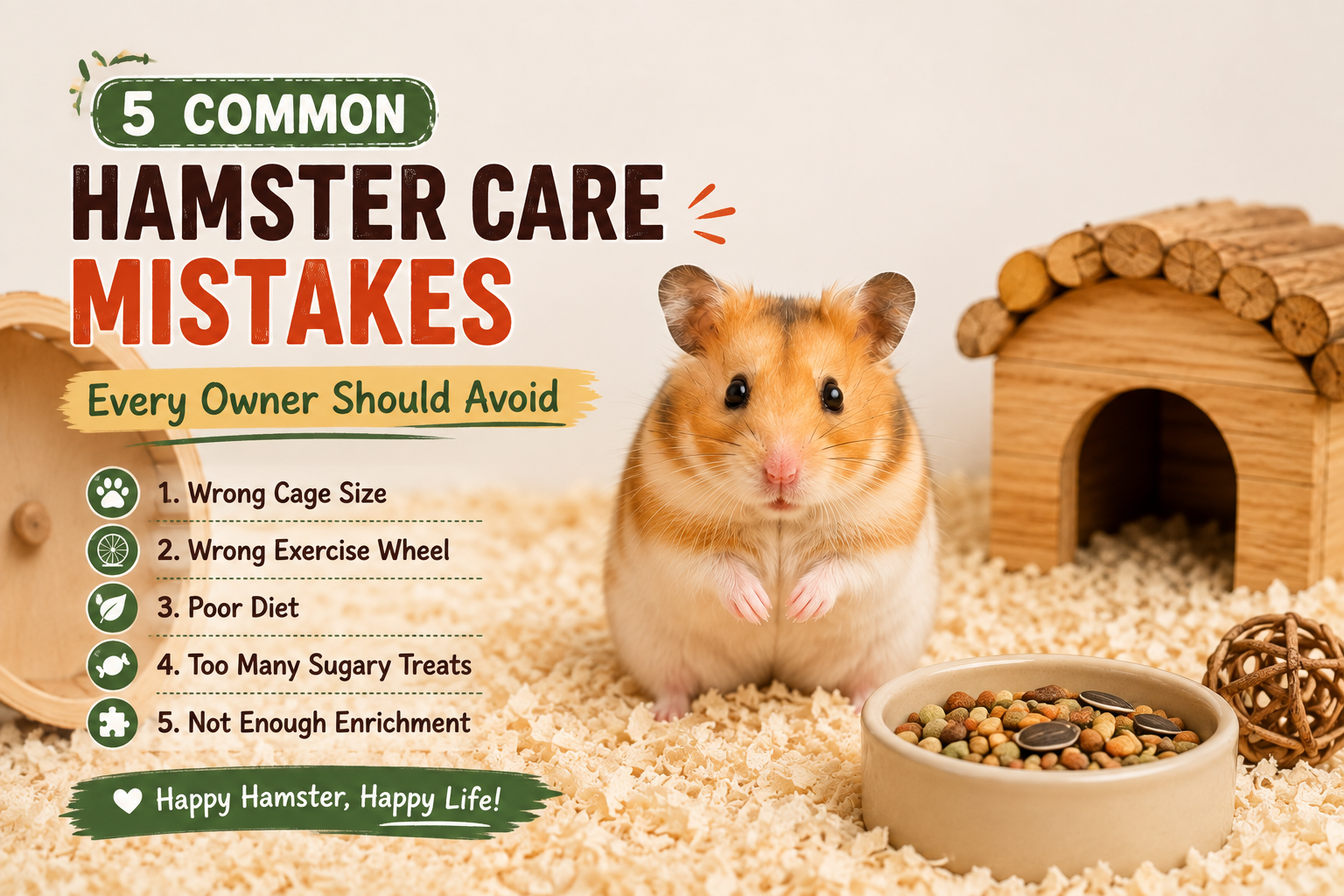
In this guide, you’ll discover the 5 common hamster care mistakes and learn how to avoid them. Whether you’re caring for a Syrian hamster or a dwarf hamster, these practical tips will help you create a safer, healthier, and more enriching environment for your furry friend.
❌ Mistake #1: Choosing a Cage That Is Too Small
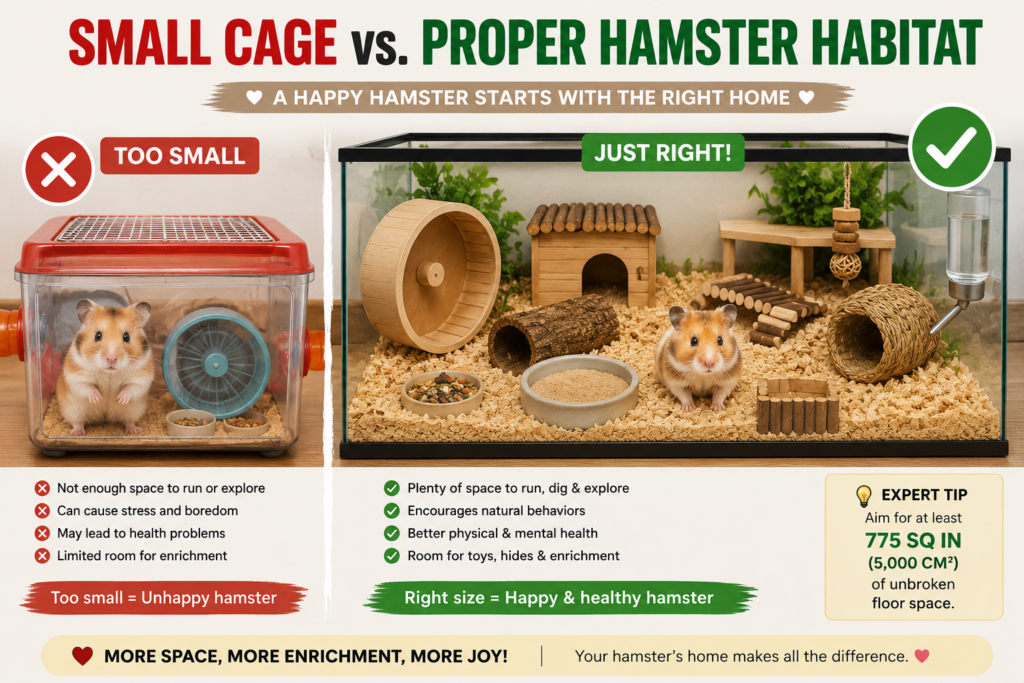
One of the biggest mistakes new hamster owners make is buying a cage that’s too small. While many pet stores sell tiny cages marketed for hamsters, these habitats often don’t provide enough room for natural behaviors like running, digging, and exploring.
A cramped cage can lead to stress, boredom, and repetitive behaviors such as bar chewing or pacing. Hamsters are active animals that travel long distances in the wild every night, so they need plenty of space to stay healthy and happy.
For most hamsters, experts recommend a cage with at least 775 square inches (5,000 cm²) of unbroken floor space. The larger the enclosure, the better. A spacious cage also gives you room to add essentials like a properly sized exercise wheel, deep bedding, tunnels, chew toys, and hiding places.
Quick Tips
- Choose the largest cage your space and budget allow.
- Avoid tiny plastic cages with multiple narrow tubes.
- Make sure there’s enough room for enrichment items without overcrowding.
- Your hamster should be able to run, dig, hide, and explore comfortably.
❌ Mistake #2: Using the Wrong Exercise Wheel
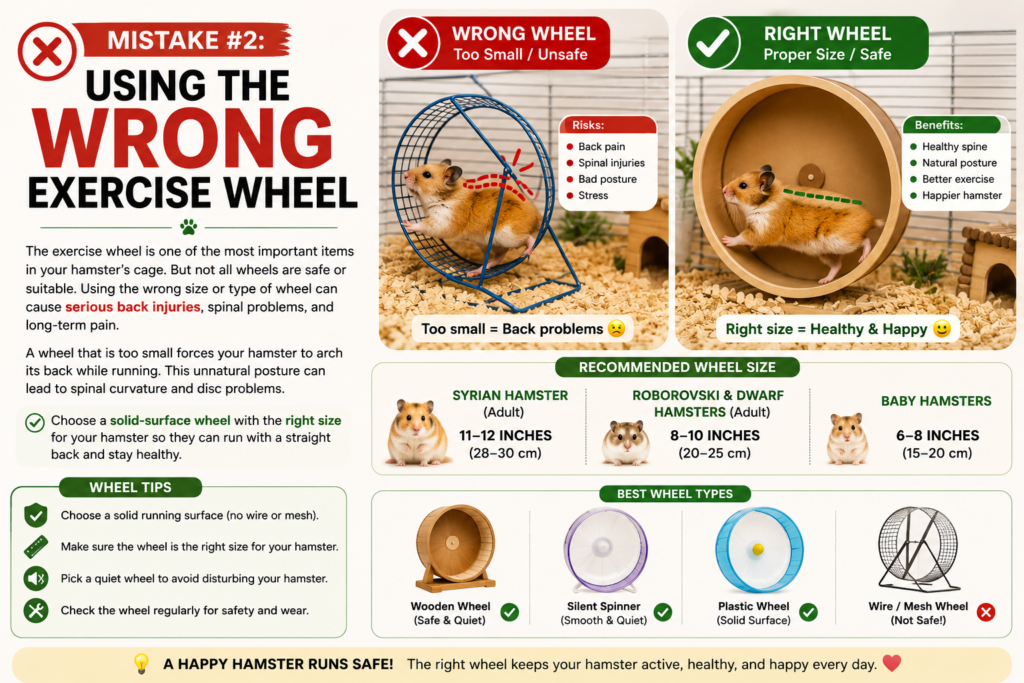
An exercise wheel is one of the most important accessories in any hamster cage, but choosing the wrong size can seriously affect your hamster’s health. A wheel that is too small forces your hamster to arch its back while running, which may lead to discomfort, spinal problems, and long-term injuries.
The ideal wheel allows your hamster to run with a straight back. This natural posture helps protect the spine and makes exercise more comfortable and enjoyable. Besides size, the wheel should also have a solid running surface instead of wire or mesh, which can injure tiny feet.
Recommended Wheel Sizes
- Syrian Hamsters: 11–12 inches (28–30 cm)
- Roborovski & Dwarf Hamsters: 8–10 inches (20–25 cm)
- Baby Hamsters: 6–8 inches (15–20 cm)
Choose the Right Wheel
✔ Pick a solid-surface wheel instead of a wire or mesh wheel.
✔ Make sure the wheel spins smoothly and quietly.
✔ Check it regularly for damage or loose parts.
✔ Upgrade the wheel if your hamster’s back bends while running.
A properly sized exercise wheel keeps your hamster active, reduces stress, and supports a healthy spine. Investing in the right wheel is one of the easiest ways to improve your hamster’s quality of life.
❌ Mistake #3: Not Providing Deep Enough Bedding
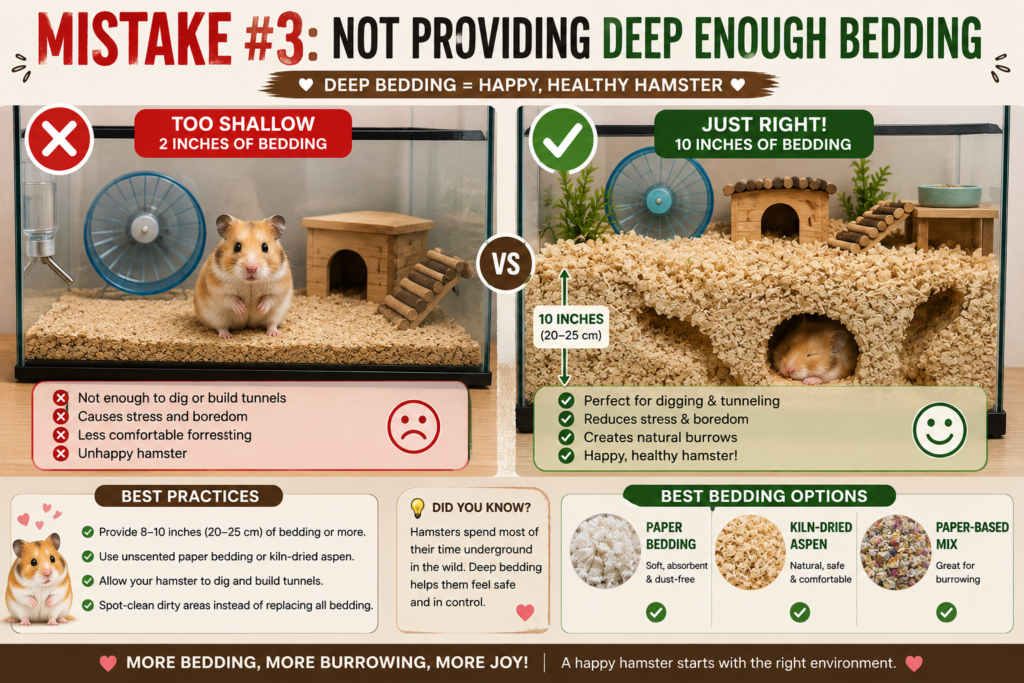
Many hamster owners underestimate how much bedding their pet really needs. A thin layer may look clean and tidy, but it prevents hamsters from doing one of their most natural behaviors—digging and building tunnels.
In the wild, hamsters spend much of their time underground in complex burrow systems where they sleep, hide food, and feel safe. Without enough bedding, they can become stressed, bored, and more likely to develop unwanted behaviors.
Experts recommend providing at least 8–10 inches (20–25 cm) of safe, soft bedding across a large portion of the cage. Deeper bedding is even better, especially for Syrian hamsters, as it allows them to create stable tunnels and comfortable nesting areas.
Avoid scented bedding, cedar, and pine wood shavings, as these materials can irritate a hamster’s respiratory system. Instead, choose high-quality paper bedding or kiln-dried aspen shavings.
Best Practices
✔ Provide 8–10 inches (20–25 cm) of bedding or more.
✔ Use unscented paper bedding or kiln-dried aspen.
✔ Allow your hamster to dig and build tunnels naturally.
✔ Spot-clean dirty areas instead of replacing all the bedding every week.
A deep bedding layer doesn’t just make the cage look better—it gives your hamster a healthier, less stressful, and more natural life.
❌Mistake #4: Feeding Too Many Sugary Treats
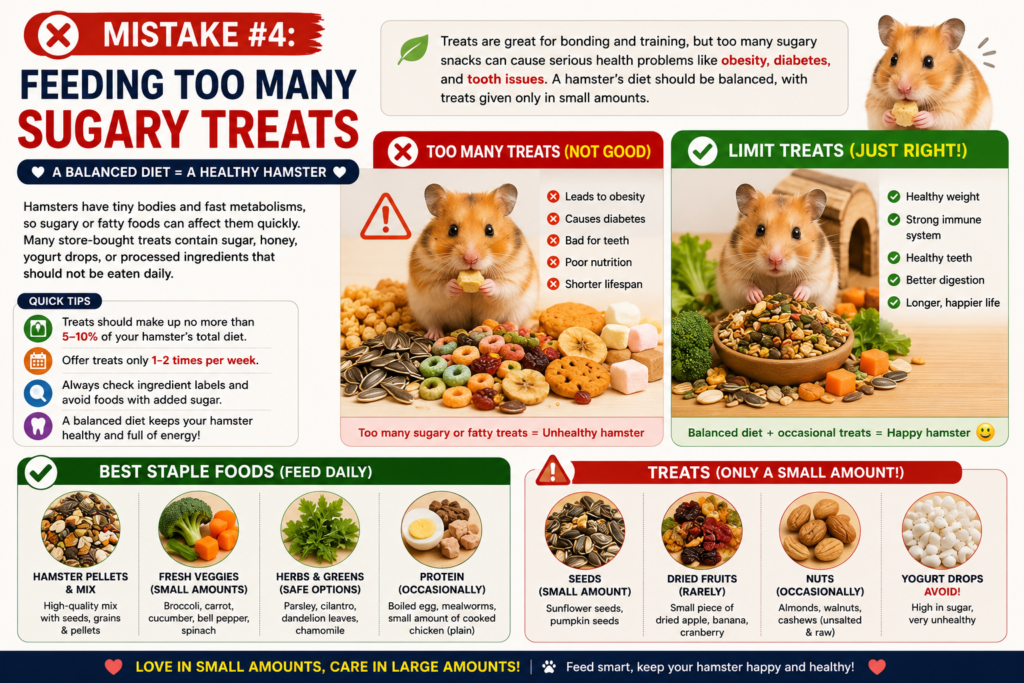
Hamsters love treats, and giving them a small snack now and then can be a fun way to bond. However, one of the biggest mistakes new owners make is offering sugary treats too often. Because hamsters have tiny bodies and fast metabolisms, even small amounts of sugar can affect their health over time.
Many commercial hamster treats contain honey, yogurt drops, artificial flavors, or added sugars. While these products may seem harmless, feeding them regularly can increase the risk of obesity, diabetes, and dental problems. A balanced diet should always come first, while treats should only be an occasional reward.
Why Too Many Sugary Treats Are a Problem
Giving sugary snacks every day may lead to:
- Weight gain and obesity.
- A higher risk of diabetes, especially in dwarf hamsters.
- Tooth and gum problems.
- Poor overall nutrition.
- A shorter and less healthy lifespan.
What Should a Healthy Hamster Eat?
A healthy daily diet should mainly include:
- High-quality hamster pellets or seed mix.
- Fresh vegetables in small portions.
- Safe herbs and leafy greens.
- Occasional protein such as boiled egg or mealworms.
Safe Treats (Only in Small Amounts)
If you want to reward your hamster, choose healthy treats such as:
- A few sunflower or pumpkin seeds.
- A tiny piece of dried fruit once in a while.
- Unsalted nuts in very small amounts.
- Fresh vegetables as a healthier alternative.
Avoid feeding yogurt drops, candy, chocolate, or any sugary human snacks.
Quick Tips
- Treats should make up no more than 5–10% of your hamster’s diet.
- Offer treats only once or twice per week.
- Always read ingredient labels before buying commercial treats.
- Fresh water should be available at all times.
Final Thoughts
Treats can strengthen the bond between you and your hamster, but moderation is the key to keeping your pet healthy. Focus on a balanced diet every day, and save sweet snacks for rare occasions. Your hamster will enjoy a longer, happier, and healthier life with the right nutrition.
❌ Mistake #5: Not Providing Enough Enrichment and Toys
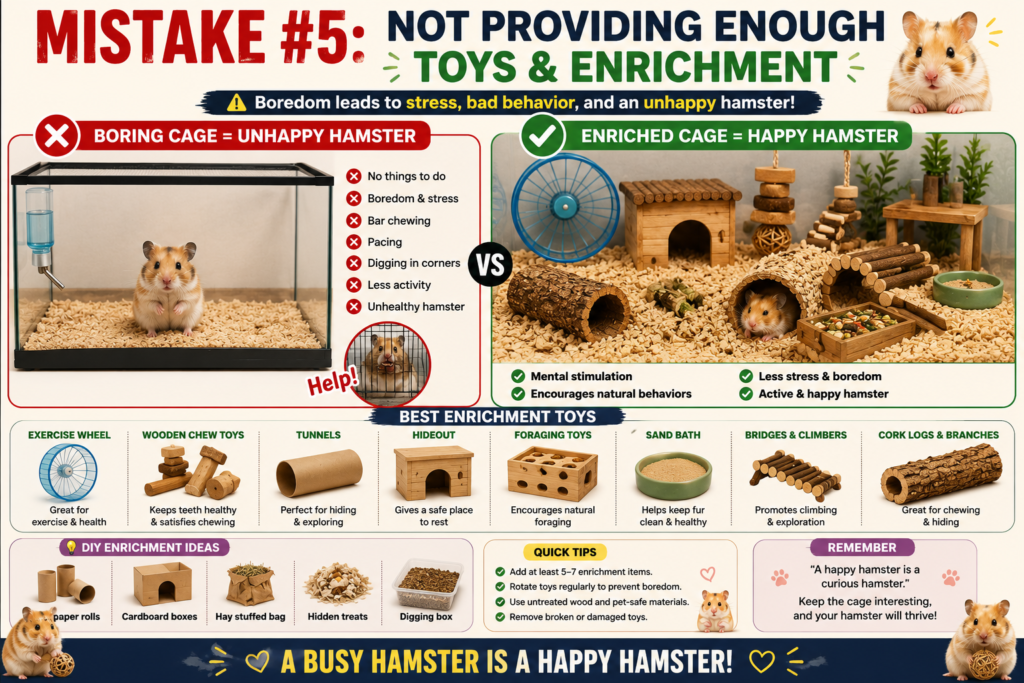
Many hamster owners believe that food, water, and a wheel are all their pet needs. In reality, hamsters are highly curious animals that need daily mental stimulation. Without enough enrichment, they can quickly become bored, stressed, and frustrated.
A hamster that has nothing to explore may start chewing cage bars, digging in corners, pacing back and forth, or sleeping excessively. These behaviors are often signs that your hamster needs more activities and a more interesting environment.
Providing a variety of safe toys and enrichment items keeps your hamster active, encourages natural behaviors, and improves its overall well-being.
Signs Your Hamster Is Bored
Your hamster may need more enrichment if you notice:
- Constant bar chewing.
- Repetitive pacing around the cage.
- Digging in the same corner repeatedly.
- Little interest in exploring.
- Sleeping more than usual when awake.
Best Enrichment Toys
A well-equipped hamster cage should include:
- Exercise wheel.
- Wooden chew toys.
- Cardboard tunnels.
- Wooden hideout.
- Foraging toys.
- Sand bath.
- Climbing bridges.
- Cork logs and natural branches.
Rotate toys every few weeks to keep the cage exciting without buying new items all the time.
Easy DIY Enrichment Ideas
You don’t have to spend a lot of money. Try:
- Empty toilet paper rolls.
- Small cardboard boxes.
- Paper bags filled with hay.
- Hidden treats inside shredded paper.
- Homemade digging boxes.
These simple ideas encourage your hamster to forage and explore naturally.
Quick Tips
✔ Add at least 5–7 enrichment items to the cage.
✔ Rotate toys regularly to prevent boredom.
✔ Use untreated wood and pet-safe materials only.
✔ Remove broken or damaged toys immediately.
Final Thoughts
A happy hamster is a busy hamster. Providing plenty of toys and enrichment helps reduce stress, encourages natural behaviors, and keeps your furry friend healthy and entertained every day.
Conclusion
Caring for a hamster is easier when you know what mistakes to avoid. By choosing the right cage, using a properly sized exercise wheel, feeding a balanced diet, limiting sugary treats, and providing plenty of enrichment, you can give your hamster a healthier and happier life.
Small improvements can make a big difference. A comfortable environment, safe accessories, and daily opportunities to explore and play will help your hamster stay active, reduce stress, and express its natural behaviors.
Whether you’re a first-time hamster owner or looking to improve your pet’s habitat, avoiding these five common mistakes is one of the best ways to ensure your furry friend lives a long, healthy, and enjoyable life.
Remember: A happy hamster isn’t just well-fed—it’s well cared for, mentally stimulated, and living in a safe, enriching home. 🐹💚