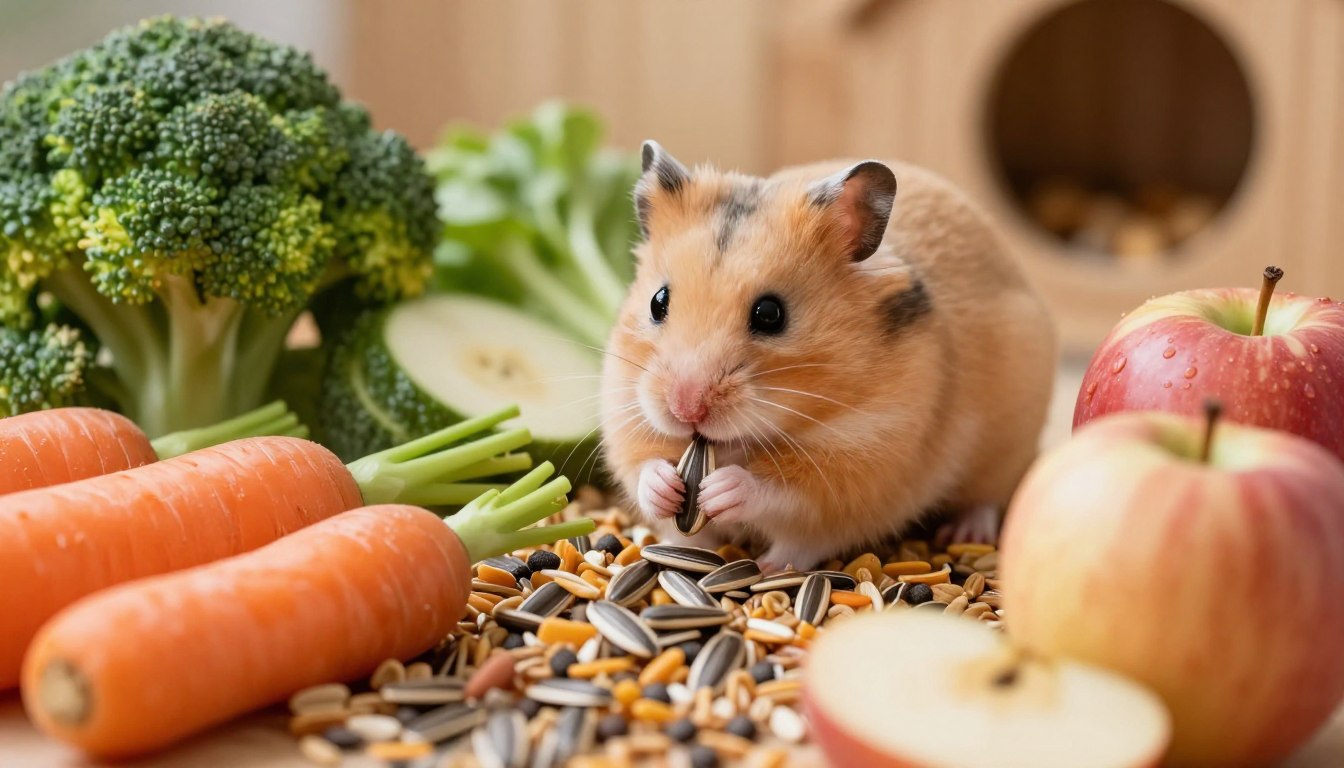
Healthy Hamster Diet Essentials Every Owner Should Know
Looking into those tiny, curious eyes, you feel an instant bond. Bringing a small companion home is a profound responsibility. It’s more than just play. Giving your hamster a healthy hamster diet is the greatest act of love you can show.
Many new owners see hamsters as simple pets. But they are actually complex omnivores. They need specific nutrients to live a long, vibrant life. This hamster care guide will help you go beyond basic feeding.
You can easily switch your pet to a structured diet. This diet supports their unique biology. Knowing their needs today means many happy moments together in the future.
Key Takeaways
- Nutrition is the foundation of a long and happy life for your pet.
- Proper feeding is the most significant way to show your commitment as an owner.
- These animals are complex omnivores with specific biological requirements.
- Moving from basic snacks to a structured plan improves overall wellness.
- This guide helps you master the essentials of daily nourishment.
Understanding the Nutritional Needs of Your Hamster
Learning about hamster nutrition is crucial for your pet’s health. Hamsters need a variety of nutrients because they are natural omnivores. A balanced diet for hamsters is more than just food; it’s about meeting their body’s needs.
The Natural Foraging Habits of Hamsters
In the wild, hamsters search for food over long distances. They eat seeds, grains, grasses, and small insects. This keeps them fit and sharp.
By mimicking their natural foraging, you can create a great diet for your hamster. Scattering food in their enclosure makes them use their instincts. This simple step can greatly improve their health.
“The secret to a healthy pet lies in understanding the environment from which they evolved, as nature provides the perfect blueprint for their dietary needs.”
Balancing Macronutrients for Longevity
To keep your hamster healthy, focus on the right mix of nutrients. Protein helps with tissue repair, and fats give them energy. Fiber is also key for a healthy gut.
An optimal hamster diet needs a balance of these nutrients for long health. Choosing high-quality foods lowers the risk of diseases. Regular hamster nutrition is key to a long, joyful life.
The Foundation of a Healthy Hamster Diet
Creating a healthy hamster diet is all about finding the right balance. Your hamster needs food that’s both nutritious and fun to eat. It’s your job to pick the best options for their health and happiness.
Selecting High-Quality Commercial Pellets
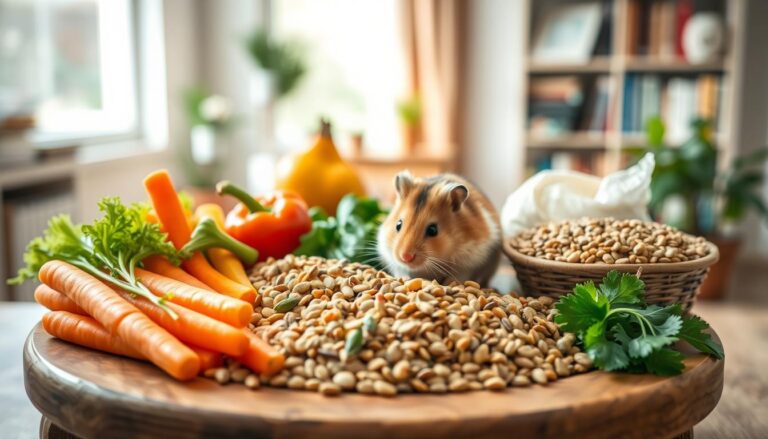
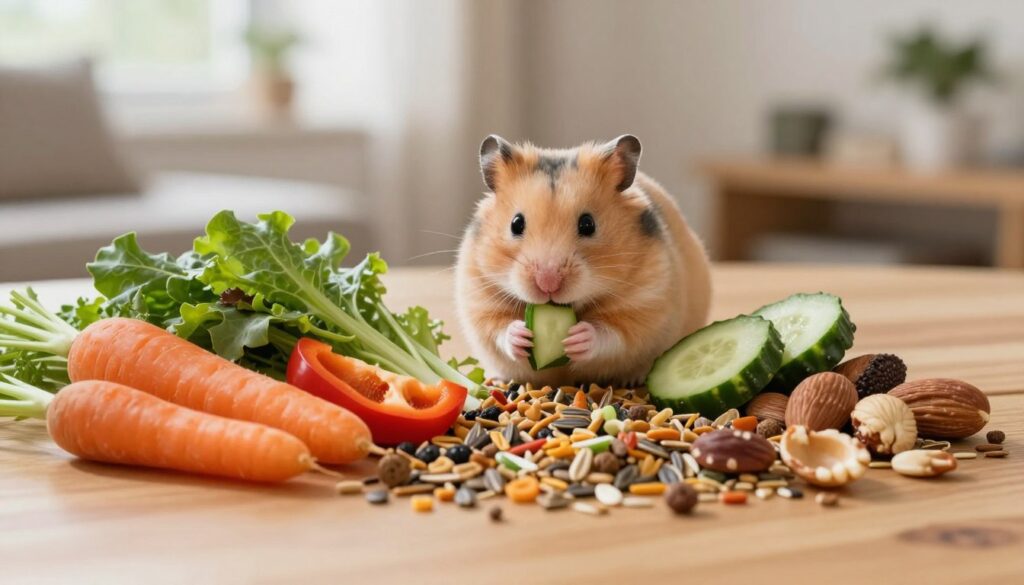
Looking for the best food for hamsters? Vets often suggest uniform pellets. These are made to give your hamster all the nutrients they need in every bite. This way, they won’t just pick their favorite bits.
These pellets also help keep your hamster’s teeth healthy. Hamsters’ teeth grow all the time, and the hard pellets help wear them down. This keeps your hamster from feeling pain and keeps them comfortable.
“Proper nutrition is the silent architect of a long and thriving life for your small companion.”
The Importance of Seed Mixes in Daily Nutrition
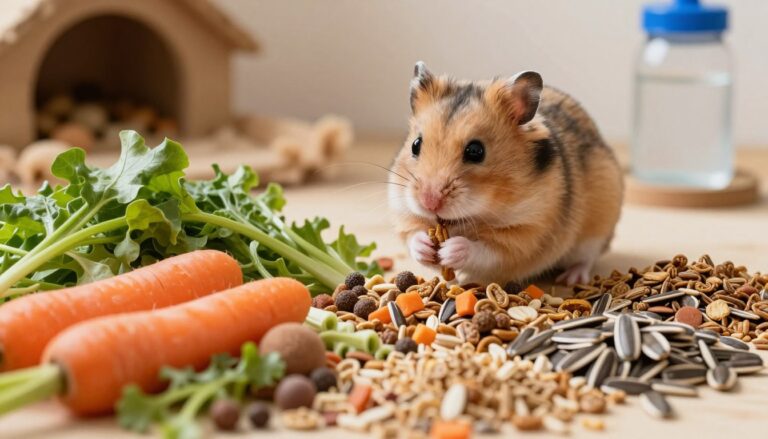
While pellets are consistent, seed mixes add variety to your hamster’s diet. These mixes are great for keeping your pet’s mind active. But, it’s important to control how much they get to keep their diet balanced.
Seed mixes can be tempting, especially if they have high-fat seeds like sunflower seeds. To avoid this, give them in small amounts or scatter them around. This encourages them to search and find all the different nutrients in the mix.
Evaluating Ingredients in Store-Bought Blends
When buying food, always check the ingredients. Stay away from mixes with too much artificial stuff, sugar, or low-quality fillers. Look for mixes with a variety of grains, seeds, and dried veggies.
If you’re thinking about making your own homemade hamster food, here’s a comparison table:
| Component | Commercial Pellet | Seed Mix |
|---|---|---|
| Nutritional Consistency | High | Low |
| Dental Wear | Excellent | Moderate |
| Foraging Value | Low | High |
By mixing pellets with high-quality seeds, you create a great diet for your hamster. Always watch their weight and energy to make sure the diet is working well.
Essential Protein Sources for Optimal Growth
To get the optimal hamster diet, you need to balance nutrients, especially protein. Commercial mixes are good, but adding specific proteins is key for young hamsters. Protein is crucial for fixing tissues and keeping muscles strong.
Safe Animal-Based Proteins
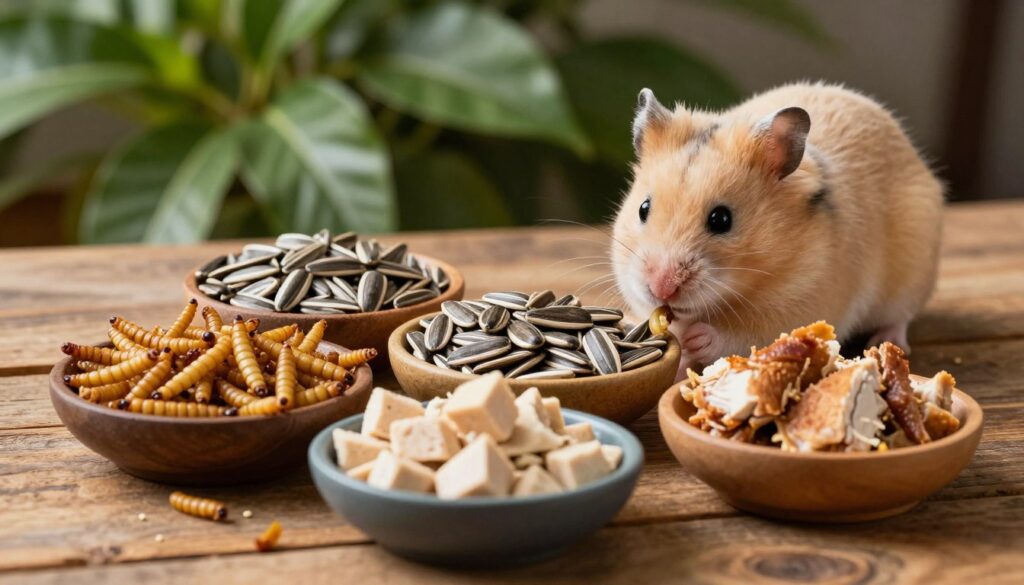
Adding small amounts of cooked, plain animal protein is safe. These are the best food for hamsters when given in small amounts. Make sure the meat is cooked well without oils, salts, or spices.
Great choices include plain, boiled chicken or a tiny bit of hard-boiled egg. Dried mealworms are also good, as they mimic hamsters’ natural foraging. These snacks give a big boost of amino acids for growth.
Plant-Based Protein Alternatives
If you don’t want animal products, many plant-based options are great. Adding these to your homemade hamster food gives your pet a variety of nutrients. Make sure to cook or soften these items to avoid digestive issues.
Lentils, chickpeas, and plain tofu are excellent for plant-based protein. Always cook them without seasonings or preservatives. By changing these sources, you ensure your hamster gets all the nutrients they need.
| Protein Source | Preparation Method | Frequency |
|---|---|---|
| Boiled Chicken | Plain, no seasoning | Once weekly |
| Mealworms | Dried or live | Small pinch daily |
| Cooked Lentils | Boiled until soft | Twice weekly |
| Hard-boiled Egg | Plain, no salt | Once every two weeks |
Incorporating Fresh Vegetables and Fruits Safely
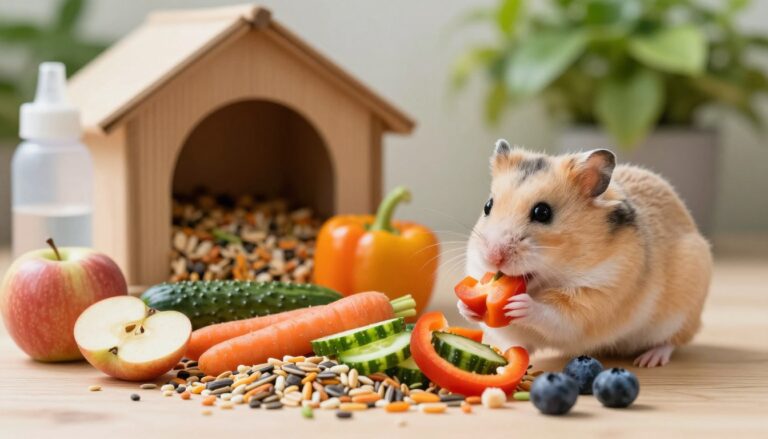
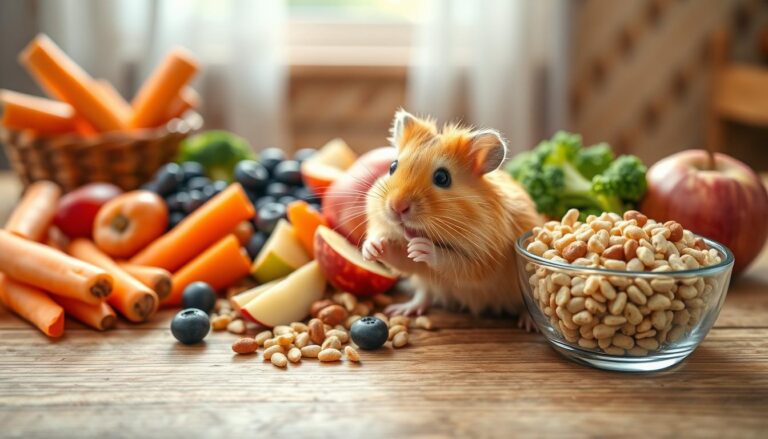
Creating a balanced hamster food list means knowing what fresh foods are safe for your pet. Commercial pellets are a base, but fresh produce adds hydration and vitamins. This is crucial for their daily health.
When making homemade hamster food, you control the quality and safety. Always introduce new foods slowly. This helps your hamster’s digestive system adjust without problems.
Best Vegetables for Daily Enrichment
Vegetables should be the main part of your fresh offerings. They are generally lower in sugar than fruits. This variety keeps your hamster’s mind active during meals.
Here are some safe, nutrient-rich options to add to your list:
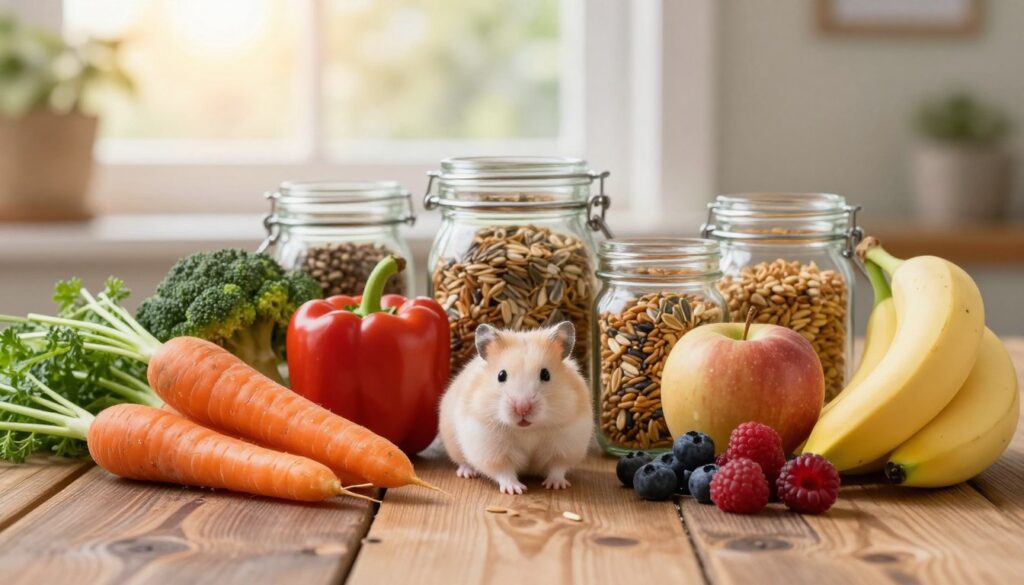
- Broccoli: A great source of fiber and vitamins.
- Carrots: Serve in small amounts due to natural sugar content.
- Cucumber: Excellent for hydration, but remove excess seeds.
- Bell Peppers: Provide a crunchy texture that hamsters love.
Fruit Portions and Sugar Content Awareness
Fruits are tasty treats, but they must be given in strict moderation. Many fruits are high in natural sugars. Too much can cause obesity or stomach problems in small breeds.
Give fruits in tiny amounts, once or twice a week. Watch for signs of diarrhea or lethargy after introducing a new fruit.
Preparing Fresh Produce to Prevent Spoilage
Proper preparation is key to keeping your pet healthy and safe. Always wash vegetables well to remove pesticides and dirt before serving them.
Make sure to remove any dangerous parts, like apple seeds or fruit pits. They contain toxic compounds. Also, remove all uneaten fresh food from the cage after a few hours. This prevents mold and bacterial contamination.
Identifying Foods to Avoid at All Costs
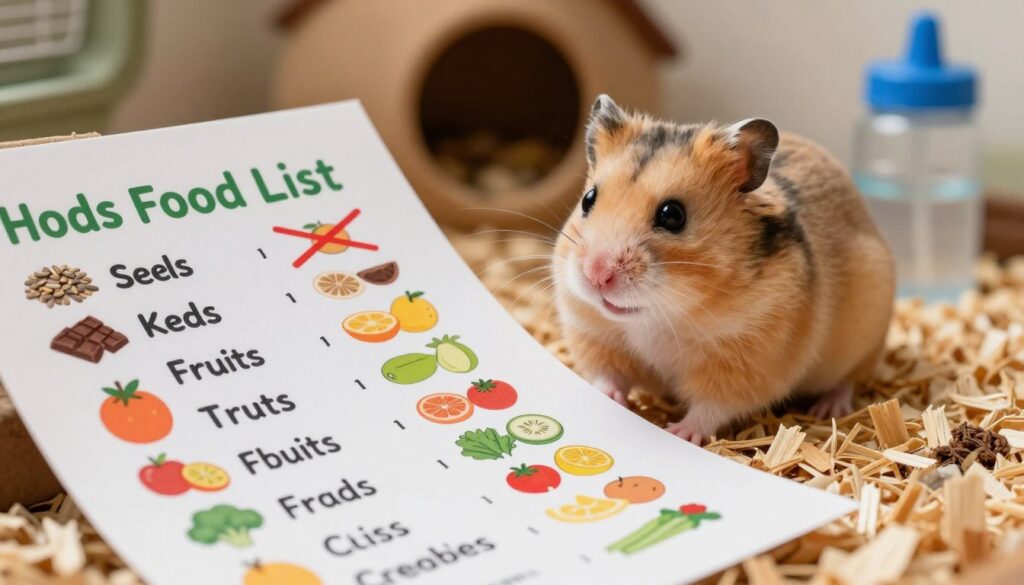
Keeping your hamster safe means knowing what not to feed them. Many human snacks are extremely dangerous for hamsters. It’s crucial to stick to a safe hamster food list to keep them healthy.
Toxic Plants and Household Foods
Some foods are toxic to hamsters, even in small amounts. For example, foods from the allium family, like onions and garlic, are harmful. They can damage a hamster’s red blood cells and cause severe anemia.
High-sugar or high-fat treats are also bad. Foods like chocolate and candy can lead to obesity and painful tooth decay. Always check your hamster food list before adding new items to their diet.
Choking Hazards and Dangerous Textures
The texture of food is also important for your pet’s safety. Sticky foods, like peanut butter, can get stuck in your hamster’s cheek pouches. This can cause serious infections or impaction, needing vet care.
Sharp or jagged items are also risky. Hard, splintery shells or nuts can hurt your hamster’s mouth and digestive tract. Being careful about these textures helps keep your pet safe.
| Food Category | Specific Examples | Reason for Avoidance |
|---|---|---|
| Allium Vegetables | Onions, Garlic, Chives | Causes blood cell damage |
| Sweets & Treats | Chocolate, Candy, Cookies | High sugar leads to obesity |
| Sticky Foods | Peanut Butter, Soft Bread | Risk of pouch impaction |
| Citrus Fruits | Lemons, Limes, Oranges | High acidity causes irritation |
Always choose fresh, safe foods for your hamster instead of human leftovers. Having a reliable hamster food list helps you make safe choices. Your careful planning is the greatest gift for your hamster’s health.
The Role of Hydration and Water Quality
Keeping your pet’s water fresh and clean is crucial. Water is essential for your pet’s health, helping with digestion and temperature control. A good hamster care guide emphasizes the importance of water quality, just like food.
Choosing the Right Water Delivery System
You can choose between drip bottles or shallow ceramic bowls for water. Drip bottles are great because they keep water clean and prevent spills. But, make sure to check them daily to avoid water flow issues.
Shallow bowls are better for older or arthritic hamsters, as they’re easier to use. Place the bowl on a stable surface to avoid contamination. Remember, consistency is key for your pet’s health.
Signs of Dehydration in Small Pets
Dehydration can hit small animals fast, so watch your pet closely. The “skin tent” test is a simple way to check hydration. Pinch the skin on your hamster’s shoulders. If it doesn’t snap back right away, they might be dehydrated.
Look out for sunken eyes, lethargy, and less appetite too. If you see these signs, get vet help fast. Dehydration can cause serious problems quickly. Regular checks are a must for any hamster care guide to keep your pet well.
Managing Portion Sizes and Feeding Schedules
Thinking a full bowl means you love your hamster? It can actually harm their health. Choosing the best food for hamsters is crucial, but how you serve it matters too. Too much food can cause weight gain and health problems that shorten their life.
Establishing a Consistent Feeding Routine
Hamsters are most active at dawn and dusk. Feed them during these times to match their natural rhythm. Consistency is key for their well-being.
Don’t leave food out all day. Hamsters might not forage if food is always there. Instead, give them set amounts at the same time each day to keep their appetite healthy.
Preventing Obesity Through Controlled Portions
Adjusting portions is vital for your hamster’s weight. Their age, activity level, and breed affect how much they need. Young, active hamsters might need more, while older or less active ones need careful watching.
Use a hamster food list to understand food calories. Hamsters hoard food, so don’t think a hidden stash means they’re hungry. Do not mistake a hidden stash for an empty stomach, as this often leads owners to overfeed.
By giving measured portions, you keep your hamster healthy and lean. Controlled feeding also saves food and keeps the cage clean. Always check your hamster’s condition and adjust feeding as needed for their long-term health.
Addressing Dietary Needs Across Different Hamster Breeds
Syrian and dwarf hamsters have different dietary needs. They share some basic nutrients but have different health needs. Using hamster feeding tips tailored to their breed is key to their health.
Specific Requirements for Syrian Hamsters
Syrian hamsters are the biggest pet hamsters and have strong stomachs. They can eat a variety of foods and are less likely to get certain health problems. It’s important to keep their diet consistent to avoid picky eating.
“A healthy diet is the foundation of a long and happy life for your small companion, but you must tailor the menu to their specific biological needs.”
For Syrian hamsters, give them high-quality pellets with the right mix of fiber and protein. You can also add fresh veggies to their diet. But, watch their weight as they can get sick from eating too many treats.
Nutritional Considerations for Dwarf Hamster Varieties
Dwarf hamsters, like Campbell’s and Winter White, need careful feeding. They are prone to diabetes and can’t handle sugar well. Good hamster feeding tips for them include small portions and no sugary foods.
To keep your dwarf hamster healthy, follow these tips:
- Limit fruit intake: Stay away from sugary fruits like grapes or bananas.
- Focus on greens: Give them leafy veggies that are low in sugar and high in fiber.
- Monitor seeds: Choose seed mixes without added honey or molasses.
By tailoring your feeding to their needs, you can prevent health problems. Remember, proactive care is better than treating illnesses. Using these hamster feeding tips will help keep your pet happy and healthy.
Recognizing Signs of Nutritional Deficiencies
Keeping your hamster healthy means watching for small changes. Hamsters hide sickness until it’s serious. Daily checks can catch problems early.
Good hamster nutrition is key to a happy life. Nutrient imbalances show in your pet’s appearance. Check your hamster during their most active times to see if they’re doing well.
Physical Indicators of Poor Diet
Your hamster’s look can tell you about their diet. A dull or thinning coat means they might not have enough healthy fats or proteins. Look for dry, flaky skin or fur loss too.
Teeth are another important area to watch. Hamsters need hard foods to keep their teeth in check. Overgrown or misaligned teeth could mean they’re not eating right or lack calcium.
| Indicator | Potential Cause | Action Required |
|---|---|---|
| Dull Coat | Lack of Omega fatty acids | Review seed mix quality |
| Overgrown Teeth | Insufficient fiber/chews | Provide wood chews |
| Weight Loss | Inadequate caloric intake | Consult a veterinarian |
Behavioral Changes Linked to Malnutrition
Watch your hamster’s behavior too. Less activity or lethargy can mean they’re not getting enough energy. If they stop using their wheel or seem bored, it’s time to check their food.
Changes in how much they eat are also important. Some hamsters can be picky, but a big change in appetite is a warning sign. Paying attention to these changes helps keep your pet healthy.
Conclusion
Feeding your hamster a balanced diet is key to their long, happy life. Good nutrition boosts their energy and health. It makes a big difference in their daily life.
Make mealtime exciting with these simple tips. Watch how your hamster likes different foods. This helps you pick the best food for them.
Being a good owner means caring for your hamster every day. Use this guide to keep up with their changing needs. It’s important for their health at every stage of life.
Small changes in how you feed your hamster can make a big difference. Share your tips with others to help improve animal care. Your hard work makes a safe, happy home for your hamster.