
How to Pick the Right Syrian Hamster Cage for Your Pet
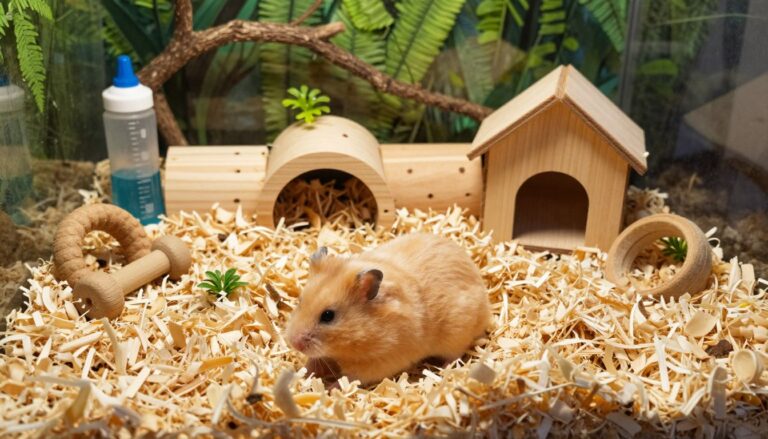
Getting a new furry friend is pure excitement. You want to give them the best life for the next two to three years. Picking the right syrian hamster cage is key to keeping them happy and healthy.
These active animals grow to be four to seven inches long. They have a natural urge to explore. Their living space must be more than a box; it should be a sanctuary. A good environment is crucial for their well-being.
Choosing the right syrian hamster cage needs careful thought. You must consider size, materials, and maintenance. Follow these expert tips to create a habitat that supports their natural behaviors and physical needs. Let us guide you in making a choice your pet will love.
Key Takeaways
- Syrian hamsters typically live between two and three years with proper care.
- Adults reach a size of four to seven inches, requiring ample floor space.
- A suitable habitat must accommodate natural territorial and burrowing behaviors.
- Material quality and ventilation are critical factors for long-term health.
- Regular maintenance of the living area prevents stress and illness.
Understanding the Space Requirements for a Syrian Hamster Cage
Choosing the right home for your pet starts with knowing their natural habits. It’s tempting to pick tall, multi-level cages. But, these often don’t meet your hamster’s needs. A good syrian hamster cage focuses on horizontal space to keep your pet active and healthy.
Why Floor Space Matters More Than Height
Many new owners think vertical height is key. But, hamsters are ground-dwellers that love to forage and explore. A tall, narrow cage limits their running and digging, causing frustration and stress.
Without enough horizontal space, hamsters may get cage rage. This can show as bar biting, constant pacing, or other destructive acts. A wide cage lets your hamster have areas for sleeping, eating, and bathroom use, which is essential for their mental well-being.
Minimum Dimensions for a Healthy Habitat
To keep your pet thriving, follow specific size guidelines. A syrian hamster cage should be at least 24 inches long, 12 inches wide, and 12 inches high. This gives a total of 360 square inches of space.
Remember, these sizes are the minimum for a healthy home. If you have more space, a bigger cage is always better. Giving your hamster more space to burrow and explore makes them happier and more active.
Evaluating Cage Types and Materials
Your choice of enclosure material affects your pet’s comfort and safety. Picking the right syrian hamster cage means balancing ventilation, visibility, and strength. Knowing how materials perform helps create a lasting home for your pet.
Comparing Glass Aquariums and Specialized Enclosures
Glass aquariums are popular for their clear view of your pet. They keep bedding in, making the area clean. But, they’re heavy and hard to move once set up.
Specialized enclosures, like acrylic or wood, offer better airflow than glass tanks. They’re made for small animals, with easy-to-open doors. A durable hamster cage from these materials boosts your pet’s life quality.
The Benefits of a Durable Hamster Cage
A durable hamster cage keeps your pet safe for years. Quality materials withstand wear and prevent escapes or damage. A strong cage also keeps odors and bacteria away.
Choosing quality means investing in your pet’s health. A solid cage gives your hamster a safe space. This stability reduces stress and encourages natural behaviors.
Why Wire Cages Often Fall Short for Syrians
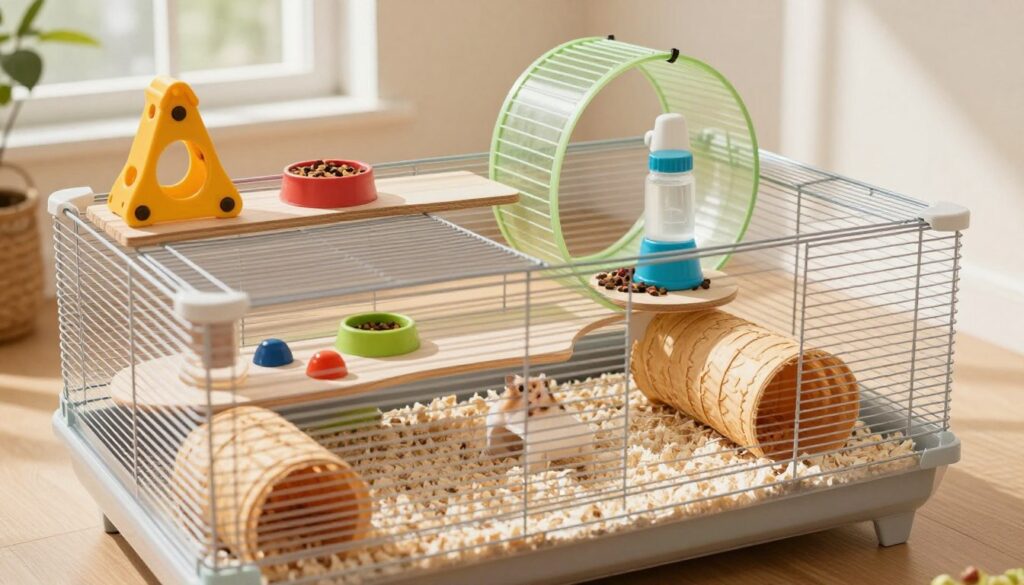
Wire cages are known for good ventilation but pose risks. Hamsters may chew on bars, causing dental or facial harm. Also, metal can rust from moisture or cleaning products.
Wire cages also make a mess. Bedding escapes, needing constant cleaning. For a syrian hamster cage, a solid-walled design is safer and cleaner.
Key Features to Look for in a Spacious Hamster Habitat
When setting up a spacious hamster habitat, focus on key features. These ensure your hamster stays healthy, active, and safe. A well-designed habitat mimics nature and keeps your pet secure.
Ventilation and Airflow Considerations
Good airflow is crucial for a healthy home. Without it, ammonia from urine can cause breathing problems. Always ensure your enclosure has constant air flow.
Choose cages with mesh tops or side vents. They let in fresh air and keep temperatures stable. A well-ventilated spacious hamster habitat keeps smells away and keeps everyone happy.
Deep Base Requirements for Burrowing
Syrian hamsters love to dig and build tunnels. Your enclosure needs a deep base for this. A deep base lets your hamster burrow comfortably.
A deep base also keeps tunnels stable. This way, your hamster has a safe place to hide and sleep. A deep base is key to a great spacious hamster habitat.
Security Features to Prevent Escapes
Small pets are great at finding small gaps. Make sure cage bars are no more than a quarter-inch apart. Safety is paramount when picking your enclosure.
Also, a secure, escape-proof lid is essential. Even with the right bar spacing, hamsters can climb or jump. Always check that all latches are strong and hard for small animals to open.
| Feature | Importance | Recommended Standard |
|---|---|---|
| Bar Spacing | Prevents escapes | Maximum 0.25 inches |
| Base Depth | Supports burrowing | Minimum 6-8 inches |
| Ventilation | Air quality | Mesh top or side vents |
| Lid Security | Prevents accidents | Locking mechanism |
Top Rated Hamster Cage Options for Your Pet
Finding the right home for your Syrian hamster is key. It’s about size, safety, and fitting into your space. Since they live for two to three years, picking the best hamster cage is crucial. Owners want a top rated hamster cage that lets their hamster burrow and exercise.
Analyzing the Niteangel Hamster Cage Series
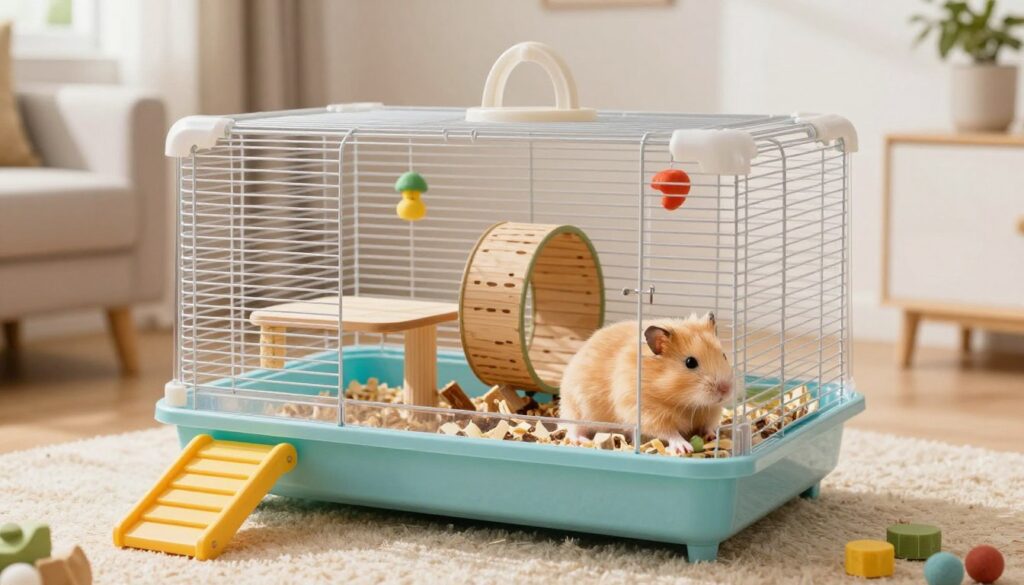
Niteangel cage reviews often highlight their focus on natural habitats. These cages have deep bases for digging tunnels. They’re also modular, so you can add more space as your hamster grows.
“A spacious, well-ventilated environment is the foundation of a happy and stress-free hamster life.”
Finding an Affordable Hamster Enclosure Without Sacrificing Quality
You don’t have to spend a lot to get a great cage. An affordable hamster enclosure can still meet your pet’s needs. Look for these important features:
- Solid flooring to protect sensitive paws.
- Secure latches that prevent escapes.
- Proper ventilation for fresh air.
Selecting a Compact Hamster Living Space for Smaller Rooms
If you live in a small space, there are still good options. Choose a compact hamster living space that focuses on floor area. Even a small cage can be great if it’s well-designed.
Opt for rectangular cages that use space well. A high-quality, small cage keeps your hamster active and happy. Make sure it’s big enough for your hamster’s health.
Maintenance and Cleaning Tips for Your Hamster Setup
Keeping your hamster’s home clean is crucial for their health and happiness. A clean environment means less stress for your pet. Start by choosing an easy to clean hamster cage to make cleaning easier.
Choosing an Easy to Clean Hamster Cage
Look for cages with big doors or removable lids. These make cleaning easier by letting you reach all parts without hassle. An easy to clean hamster cage also has smooth surfaces that don’t stain or smell.
Stay away from cages with too many small spaces. Simple designs are better for keeping things clean. A cage that’s easy to clean is healthier for your hamster.
Establishing a Routine for Spot Cleaning and Deep Cleaning
Keeping things clean regularly is important. Clean the potty area every day to stop bad smells. This keeps the cage smelling good.
“Cleanliness is the hallmark of a healthy home, and for your small pet, it is the foundation of a long and happy life.”
Deep clean the cage once a week. Take out all bedding, wash accessories, and let them dry before putting everything back. This keeps your easy to clean hamster cage safe for your pet.
Managing Bedding and Substrate for Odor Control
The bedding you use is key for keeping smells away. Choose absorbent paper-based substrates that soak up moisture well. Deep bedding encourages burrowing and keeps waste hidden.
If smells linger, check the corners where your hamster sleeps or eats. Freshening these spots regularly keeps the air fresh. Proper maintenance is essential for your hamster’s health.
Conclusion
Your journey to being a responsible pet owner begins with the environment you create. Choosing the right enclosure is key to your Syrian hamster’s happiness and health.
Make sure your pet has enough floor space to explore and act naturally. Opt for durable materials like those from Niteangel to ensure your investment lasts. A safe habitat is crucial for your pet’s safety and your bond.
Keeping a regular cleaning schedule is essential for your pet’s happiness. It prevents stress and keeps their home clean. A happy hamster shows the quality of your care every day.
Remember these tips as you set up your hamster’s home. You have everything you need to create a great environment for your furry friend. Enjoy watching your hamster settle into their new, comfortable home.