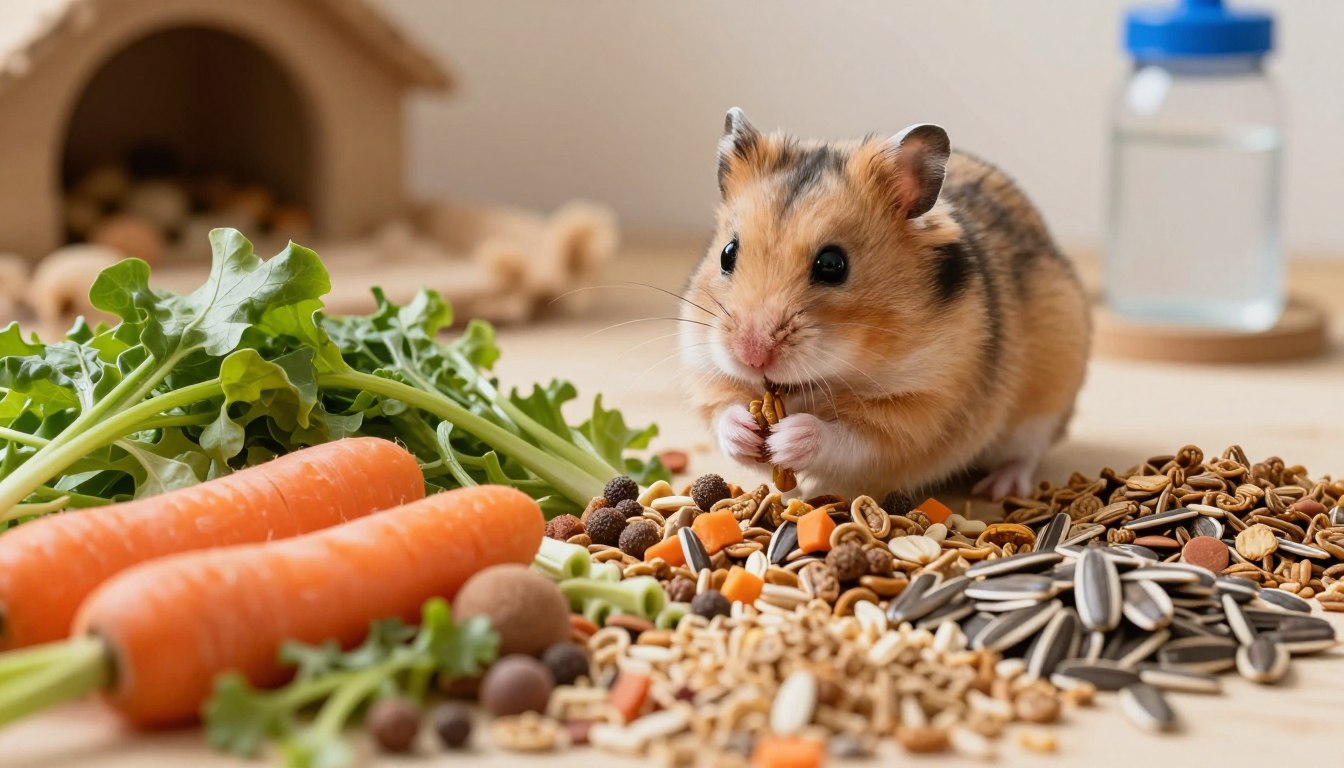
Hamster Diet Essentials to Keep Your Pet Healthy
Watching your tiny companion explore its enclosure brings joy to your home. You want your furry friend to live a long, vibrant life. Providing the right nutrition is key as a pet owner.
A proper hamster diet is crucial for your pet’s well-being. Knowing your pet’s specific needs helps prevent health issues. This keeps your companion happy and healthy every day.
By focusing on a balanced hamster diet, you create a nurturing environment. This guide will help you understand the basics of feline-friendly nutrition for your pet.
Key Takeaways
- Nutrition is the primary factor in your pet’s longevity and daily happiness.
- Understanding basic food requirements helps prevent many common health complications.
- A balanced intake supports high energy levels and physical vitality.
- Responsible ownership begins with selecting high-quality, species-appropriate food sources.
- Consistent feeding habits contribute to a stable and stress-free life for your pet.
Understanding the Nutritional Needs of Your Hamster
Creating a balanced hamster nutrition plan means knowing your pet is not just a plant eater. They can eat a variety of foods, not just plants.
Knowing what your hamster needs is key to a healthy hamster diet. This diet supports their health and happiness. It’s all about giving them what they naturally crave.
The Omnivorous Nature of Hamsters
Hamsters in the wild eat a lot of different things. They munch on seeds, grains, and grasses. They also eat insects and small animals when they can.
This eating style means their bodies are made to handle many types of food. A varied diet helps them get all the nutrients they need.
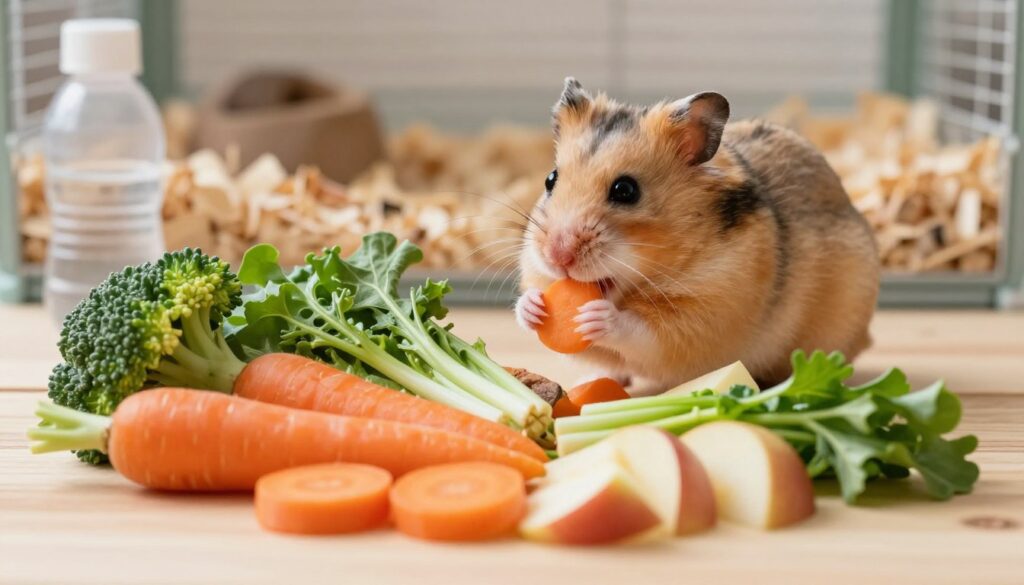
Key Macronutrients: Proteins, Fats, and Carbohydrates
Your hamster needs the right mix of proteins, fats, and carbs to stay healthy. Each one is important for their energy and health:
- Proteins: Help with muscle growth and repair.
- Fats: Give energy and keep their skin and fur healthy.
- Carbohydrates: Fuel their daily activities and metabolism.
Finding the right balance is crucial. Too much of one can cause problems. Not enough can make them tired or sick.
The Importance of Fiber for Digestive Health
Fiber is very important for balanced hamster nutrition. It helps their digestive system work well and prevents health issues.
Foods high in fiber help control blood sugar and keep their teeth healthy. Adding fiber-rich foods to their diet keeps them feeling good and active.
Selecting the Best Food for Hamsters
Choosing the best food for hamsters is key to their happiness and health. This hamster food guide makes it easier to pick the right food. Knowing about nutrition helps you make choices that keep your pet healthy.
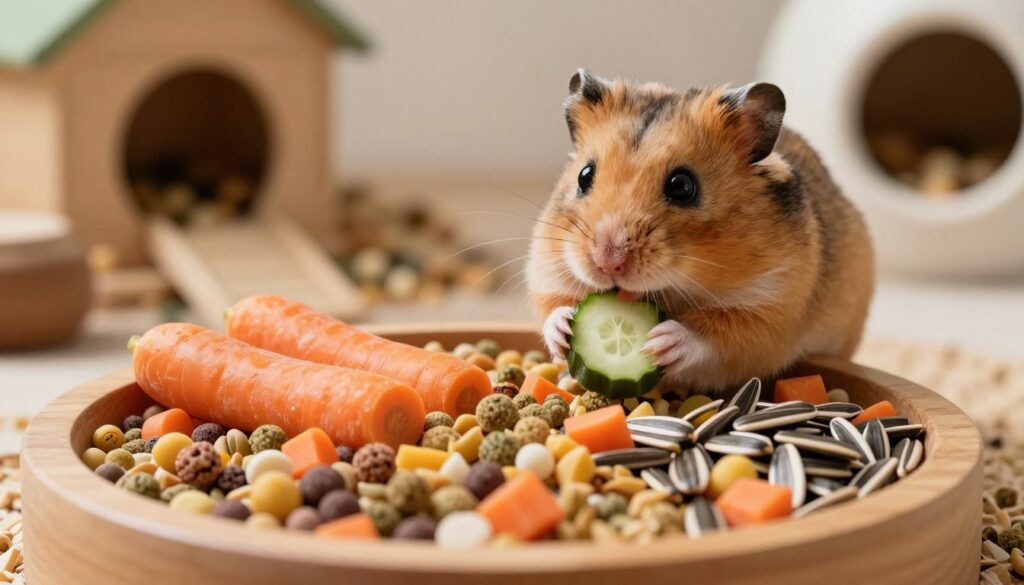
Evaluating Commercial Seed Mixes vs. Pelleted Diets
There are two main types of food: muesli-style seed mixes and pelleted diets. Seed mixes encourage natural foraging, which is good for their minds. But, picky eaters might only eat their favorite seeds, which can be bad for their health.
Pelleted diets, on the other hand, offer complete nutrition in every bite. They are uniform, so your hamster can’t pick and choose. This ensures they get all the vitamins and minerals they need. Plus, the hard texture of pellets helps wear down constantly growing incisors, which is important for their teeth.
Identifying High-Quality Ingredients
A good diet should have natural, whole-food ingredients. Look for specific grains, seeds, and proteins instead of vague terms like “by-products.” Some owners make homemade hamster food, but it’s hard to get the right mix of nutrients.
Always check the packaging for guaranteed analysis. A healthy diet should have about 15% to 20% protein and 4% to 7% fat. Good mixes have a variety of seeds, dried veggies, and sometimes legumes to mimic a natural diet.
Ingredients to Avoid in Store-Bought Food
Not all commercial foods are good. Avoid foods with artificial colors, preservatives, or too much sugar. These can cause obesity and health problems.
Be careful of foods with a lot of corn or sunflower seeds. While hamsters like them, they are too fatty. If you see “sugar” or “molasses” at the top of the list, choose a different brand.
| Diet Type | Nutritional Balance | Dental Benefit | Foraging Potential |
|---|---|---|---|
| Seed Mixes | Variable | Low | High |
| Pelleted Diets | Excellent | High | Low |
| Combined Diet | Good | Moderate | Moderate |
Fresh Foods and Vegetables for a Balanced Hamster Diet
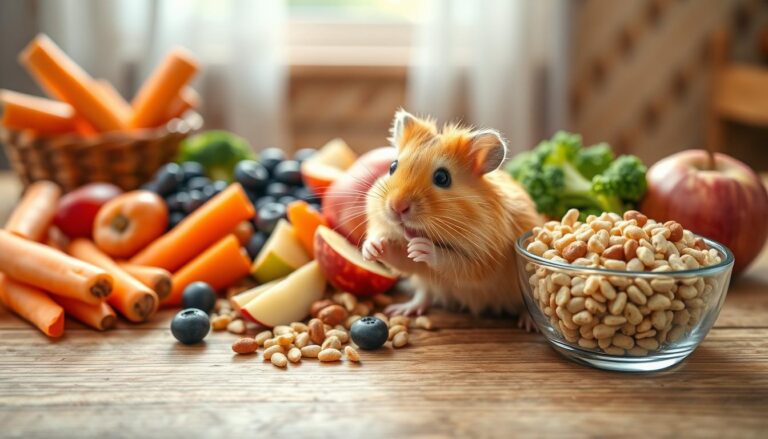
Adding fresh vegetables and fruits to your hamster’s diet is a smart move. High-quality pellets are the main food, but fresh items add vitamins and water. Treat them as extra food, not a full meal replacement.
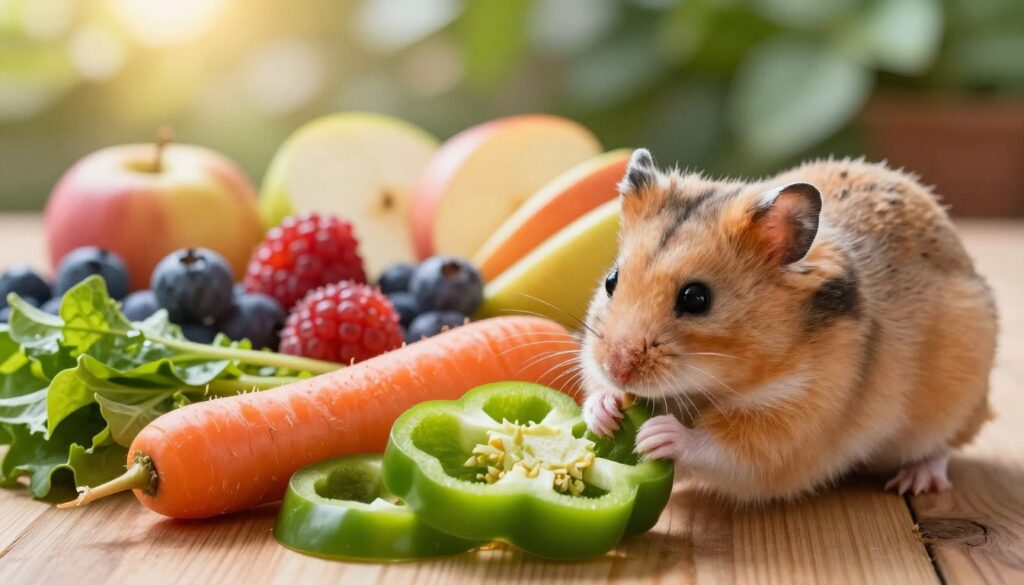
Safe Vegetables to Incorporate into Daily Meals
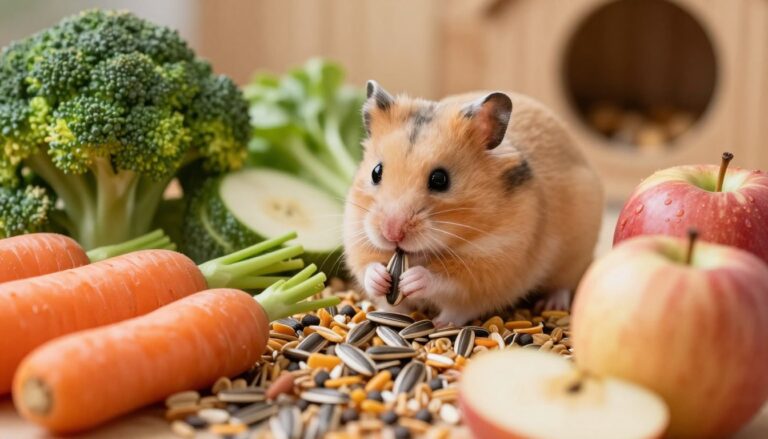
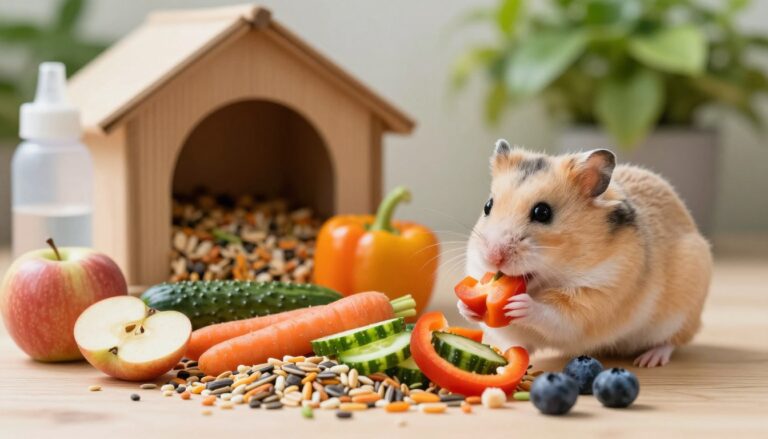
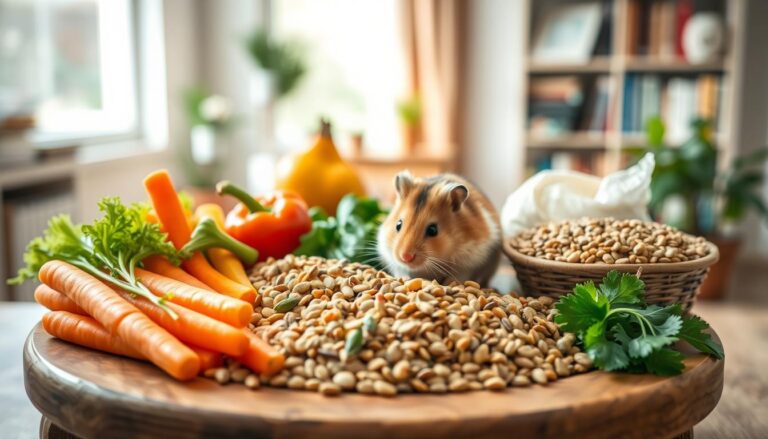
Choose greens that are good for your hamster’s health. Broccoli, carrots, cucumber, and bell peppers are great. Remember, give them in tiny amounts to avoid stomach problems.
Offering different textures keeps mealtime interesting. Rotate vegetables to give your hamster a variety of nutrients. This keeps their diet balanced without upsetting their stomachs.
Fruit Treats: Moderation is Key
Fruits are tasty but high in sugar. So, give them in small amounts. A tiny apple slice or a small strawberry piece is okay.
Too much sugar can cause weight gain and health problems. Limit fruit to keep your hamster healthy. Watch how they react to new fruits.
Preparing Fresh Produce to Prevent Spoilage
How you prepare food is as important as what you choose. Wash all produce well to remove chemicals. Dry it with a paper towel to avoid cage moisture.
Fresh food can spoil fast, leading to bacteria. Remove uneaten food within hours to keep the cage clean. This is key for your hamster’s health and a clean home.
Protein Sources and Healthy Snacks
When you think about homemade hamster food, adding animal-based proteins is a good idea. Grains give energy, but a little protein keeps muscles strong and boosts vitality. Knowing what to feed hamsters helps them get all the nutrients they need to stay healthy.
Safe Animal-Based Proteins
Hamsters are natural omnivores, so they need some protein. You can give them small, plain pieces of cooked chicken or turkey. Boiled eggs are also a great protein source that hamsters love.
Dried mealworms or crickets are great for feeding hamsters. They’re like what hamsters might find in the wild. Make sure to buy these from trusted pet stores to avoid bad stuff.
Healthy Treats for Enrichment
Treats are great for bonding and keeping your hamster’s mind sharp. Try giving them small, plain nuts like walnuts or almonds. Hand-feeding these treats helps build trust.
Vegetables like broccoli florets or cucumber slices are also good snacks. Just remember to give them in small amounts to avoid spoilage. Variety keeps your hamster happy and healthy.
Foods That Are Toxic to Hamsters
It’s just as important to know what not to give your hamster. Some common foods can be very dangerous. Never give them:
- Citrus fruits: They’re too acidic and can upset their stomach.
- Raw potatoes: They have solanine, which is toxic.
- Onions and garlic: They can cause anemia by damaging red blood cells.
- Apple seeds: They have cyanide, which is harmful.
By knowing what to avoid, you keep your hamster safe from poisoning. Always check new foods before adding them to their diet. A safe, balanced diet is key to a long, healthy life for your hamster.
Establishing a Proper Hamster Diet Routine
Creating a steady meal schedule is key for your hamster’s health. Feeding at the same times each day makes your pet feel safe and lowers stress. A proper hamster diet is about what and how much you give.
Determining Daily Portion Sizes
Hamsters need about one to two tablespoons of quality mix daily. Avoid overfeeding to prevent obesity and food waste. Consistency helps keep your hamster at a healthy weight.
“The secret to a happy pet lies in the balance of nutrition and the structure of their daily environment.”
Check the food brand’s guidelines, as calorie content varies. Adjust portions based on your hamster’s species and activity level. If food is left, you might be giving too much.
The Role of Foraging in Feeding
Hamsters in the wild spend hours finding food. Scatter-feeding mimics this, making feeding hamsters fun and mentally stimulating.
- Hide small portions of seeds in their bedding.
- Use puzzle toys to encourage natural digging instincts.
- Rotate hiding spots to keep the experience fresh and exciting.
This method prevents boredom and boosts physical activity. It makes your pet’s hamster diet more natural and rewarding.
Monitoring Your Hamster’s Weight and Health
Watching your pet closely is crucial for a proper hamster diet. Weigh them weekly with a small kitchen scale to track changes. Sudden weight changes can mean health issues.
Look at their coat, energy, and grooming. If they seem tired or won’t eat, see a vet right away. Staying alert ensures feeding hamsters stays positive and healthy for years.
Conclusion
Feeding your hamster a balanced diet is key to their long-term health and happiness. Start with a high-quality pelleted base. Then, add safe, fresh supplements and natural enrichment.
This guide helps you understand small pet nutrition. You’ll know how to pick the best food for hamsters. And you’ll avoid harmful ingredients that can harm them.
Keep an eye on your hamster’s weight to keep them healthy. Small changes in their food can stop health problems early.
Good nutrition boosts your hamster’s energy every day. By following this guide, you give them the best food. Your hamster will live a happy, healthy life with your care.